
The Caribbean evokes visions of powdery white sands, swaying palms, and endless turquoise horizons. For scuba divers, the real magic unfolds beneath the surface. Slip on tanks, descend into warm, crystal-clear waters, and enter a world of plunging vertical walls draped in massive barrel sponges, historic shipwrecks teeming with tarpon and barracuda, dramatic swim-throughs lit by shafts of sunlight, and encounters with everything from gentle sea turtles to schooling reef sharks.
Scuba diving allows you to explore depths of 30 to 130+ feet (9 to 40+ m) for 45 to 70 minutes per dive. At these depths, divers experience pressure changes, nitrogen effects at safe limits, and ecosystems that cannot be accessed from the surface. The Caribbean is home to the second-longest barrier reef system on Earth, the Mesoamerican Reef, along with more than 1,000 fish species and vibrant coral gardens protected by marine parks. Water temperatures range from 78 to 86°F (26 to 30°C) year-round. Visibility frequently reaches 60 to 100+ feet (18 to 30+ m), with mild to moderate currents and highly developed dive infrastructure across most islands.
This comprehensive guide covers certifications and costs, wind, currents, and visibility realities, season-by-season advice, marine life expectations, a detailed planning table, in-depth destination profiles with 50+ specific dive sites, dive types, liveaboard options, conservation practices, common mistakes, expanded FAQs, and a step-by-step action plan. Whether you are newly certified or an experienced diver, this guide will help you design a well-informed Caribbean diving trip.
 Why Scuba Diving in the Caribbean Stands Out
- Vertical walls in the Cayman Islands, Belize, and Cozumel drop from 30 feet to more than 2,000 feet, covered in black coral and large sponges
- Wrecks such as Bonaire’s Hilma Hooker and Grand Cayman’s Kittiwake function as artificial reefs with penetrable interiors
- Drift dives in Cozumel and Roatán allow divers to move with the current across expansive reef systems
- Blue holes and caverns in Belize, the Bahamas, and Mexico create dramatic geological formations
- Night dives reveal octopus, hunting patterns, and bioluminescence
- Macro life includes seahorses, frogfish, nudibranchs, and pipefish
Recent 2026 rankings consistently place Curaçao, Bonaire, Cozumel, Little Cayman, and Belize among the most reliable destinations for marine health and variety. Marine protection efforts such as Bonaire National Marine Park and the Belize Barrier Reef UNESCO designation continue to support reef resilience.
Osaviva Insight:
The diving across the Caribbean can feel surprisingly similar underwater, but the overall trip experience is quite different depending on where you base yourself. Islands like Curaçao, Bonaire, and the Caymans are easy and efficient. You wake up, grab your gear, and you’re in the water quickly, with very little friction in the day. Places like Belize, Roatán, and parts of Mexico feel more layered. Diving is still excellent, but it’s part of a bigger experience that might include jungle lodges, wildlife, and time on the mainland. It really comes down to whether you want a dive-focused escape or something that blends diving with a wider sense of travel.
 Getting Started: Certifications, Gear, Costs & Safety (2026 Realities)
No prior experience is required to begin. Options include:
- PADI Discover Scuba Diving: introductory program, from $150 to $350+
- Open Water Certification: 3 to 4 days, $350 to $1500+, including 4 dives
Advanced certifications include Nitrox, Wreck, Drift, and Deep Diver specialties.
Gear Essentials
- BCD and regulator
- Dive computer
- 3 to 5 mm wetsuit
- Mask, fins, snorkel
- Weights
2026 Average Cost Overview (per person, USD)
Caribbean diving costs vary significantly by destination. Budget-friendly islands like Roatan (Honduras Bay Islands) and Bonaire offer lower prices due to competition, accessible reefs, and lower operational costs. Premium islands such as Grand Cayman, Turks & Caicos, and the Bahamas command higher rates from high demand, fuel expenses, and marine protections. All figures below are for certified divers on standard shared boat dives (unless noted). Add-ons typically include:
- 10–15% taxes + marine park fees ($10–$40 per trip or year)
- Gear rental ($10–$20/day or $15–$40 full set)
- Nitrox ($5–$15/tank)
- Gratuities (10–20%)
These ranges reflect current 2025–2026 operator pricing and are expected to remain stable or increase modestly into 2027.
- 2-tank boat dive: $85–$170 Budget islands: $85–$130 (e.g., Roatan operators ~$90–$120 incl. guide/tanks; packages often $100–$110 for two tanks) Premium islands: $130–$170 (e.g., Grand Cayman ~$150–$160; Turks & Caicos similar or higher)
- Shore diving packages: $30–$80 per day Bonaire (shore-diving capital): unlimited shore access often ~$35–$50/day equivalent (frequently bundled in resort packages with vehicle rental; e.g., drive-and-dive from ~$1,100–$1,500/week incl. unlimited tanks)
- 6-dive package: $280–$650 Budget: $280–$450 (e.g., Roatan multi-dive packages ~$245–$470 for 5–10 dives) Premium: $420–$650 (e.g., multi-day packages in Grand Cayman or similar)
- Liveaboard (7 nights): $2,200–$4,800 Most common range $2,500–$3,800 (includes all meals, 18–27 dives, cabin; e.g., Roatan Aggressor ~$2,295–$3,294; Turks & Caicos Aggressor/Explorer ~$2,495–$3,995; Bahamas or Belize Aggressor ~$2,886–$3,695; specials often reduce to $2,200–$3,000)
- Certification + dives (PADI Open Water + 4 dives): $450–$950 Budget locations often $400–$700 (e.g., Roatan ~$400–$530 incl. eLearning, gear, taxes) Premium islands $600–$950 (e.g., Grand Cayman ~$450–$650; some centers $643–$650)
Budget travelers can stay at the lower ends (especially in Roatan or Bonaire), while premium destinations or add-ons push toward the higher figures.

Osaviva Insight:
Earning a full PADI Open Water certification (or even the shorter Discover Scuba Diving intro) typically requires 3–5 days of dedicated training time, including classroom/eLearning sessions, confined-water skills practice, and multiple open-water dives. If your vacation is short (e.g., 5–7 days total) or you want maximum time actually exploring reefs rather than training, certification may not be the most efficient choice. In those cases, many travelers find it more enjoyable to stick with snorkeling or opt for a Discover Scuba experience if they want a taste of diving without committing to the full certification process. This approach frees up more vacation days for relaxation, other activities, or simply more dives once you’re comfortable in the water.
Private vs. Shared Diving Experiences and Typical Cost Differential
Most Caribbean diving is done on shared boats: scheduled departures with 6–16 divers (sometimes more), 1–2 divemasters, fixed sites based on conditions, and a social, efficient vibe. This is the default because it spreads boat and guide costs across the group. This setup is perfect for those that want to meet other divers, or those that seek more accessible prices.
Private or exclusive diving: these options give you (or your small group) full control
- Private divemaster/guide add-on (for 2–4 people): Your own dedicated guide on a shared boat or small group. Flexible pace, custom sites, better for photography or beginners. Typical add-on: $20–$50 per person per dive or $100–$200 flat per trip.
- Full private boat charter: The entire vessel is yours—no other divers. Choose exact dive times, sites, and even add extra dives. Half-day charters commonly run $850–$1,800 for the boat (gear often included); full day higher. Examples: Grand Cayman private half-day ~$850–$950 (up to 4–15 divers depending on operator); full day ~$1,500–$1,800; Bonaire private yacht charters ~$1,499+ for half-day.
Typical cost differential: Private experiences cost 50–150%+ more per person than shared dives (sometimes double for solo/couples).
- Shared 2-tank: $85–$170
- Private equivalent: $200–$450+ pp (or boat fee divided by group size)
The premium shrinks with larger groups (4–8 people) but skyrockets for 1–2. Many operators offer “small-group” boats (max 4–6) as their standard, which sits in the middle.
When private makes sense:
- Couples/families wanting privacy or custom pacing
- Underwater photographers or videographers
- Special occasions or very specific sites
- Beginners needing extra attention
Many divers mix both: shared for volume diving, private for 1–2 highlight days. If exclusivity is key, budget the 50–150% uplift and book early. Private charters fill up fast in peak season.
Safety
Dive with a certified operator or guide. Divers Alert Network (DAN) insurance is strongly recommended. Follow no-decompression limits and maintain proper buoyancy to protect reefs.
 Understanding Conditions: Wind, Currents, Visibility & Seasonality
The most important variables for Caribbean diving are wind, swell, and water clarity, which directly impact safety, comfort, and the overall experience.
- Visibility: Typically 80–120 feet (25–35 meters) during the dry season; can drop to 40–60 feet (12–18 meters) after heavy rainfall or runoff, though this is less common on arid southern islands.
- Currents: Generally mild on most sites, but stronger in drift dives or channels; always check local conditions and dive with experienced guides.
-
Water temperature: Averages 78°F (26°C) in winter, rising to 84–86°F (29–30°C) in summer. It's warm enough for rash guards or shorties year-round.
Dry Season (December to May)
- Best overall conditions: Calm seas, minimal swell, strong visibility, and reliable sunny weather.
- Calm mornings are ideal for boat dives; afternoons can bring trade winds (stronger on windward sides).
- Peak travel period: December to April brings crowds, higher prices, but excellent diving reliability.
Green Season (June to November)
- Warmer water temperatures (often 84–86°F/29–30°C) and excellent for marine life sightings.
- Fewer crowds, better pricing on accommodations, dives, and packages—great for budget or repeat visitors.
- Occasional short, heavy rain showers can briefly reduce visibility, but these are usually brief.
-
Hurricane risk peaks August to October across much of the Caribbean, with potential for rough seas, cancellations, and travel disruptions on many islands.

Important note on hurricane risk: Most Caribbean destinations face elevated chances of tropical storms or hurricanes during June–November (peak August–October), which can bring high winds, large swells, poor visibility, and boat dive cancellations. However, the ABC Islands (Aruba, Bonaire, and Curaçao) stand out as exceptionally low-risk. Located just north of Venezuela and south/outside the main hurricane belt, they experience minimal direct impacts (e.g., no direct landfalls in over a century for most, with annual strike risk around 2% or less for Bonaire). Even nearby systems typically result in only brushes, light rain, or increased wind rather than major disruptions. This makes the ABCs a reliable year-round choice for diving, especially if avoiding peak-season crowds or budgeting during "hurricane season" elsewhere. Other southern/fringe islands (e.g., Grenada, Barbados) offer similar advantages, but the ABCs are consistently highlighted for their near-hurricane-free reputation.
No matter the season, always monitor forecasts, choose operators with flexible policies, and consider travel insurance that covers weather-related cancellations. The ABC Islands offer particularly reliable year-round conditions, making them a top pick for consistent diving without seasonal worries.
 What You Can See: Marine Life & Habitat Realities
The Caribbean's underwater world is incredibly diverse, with vibrant coral reefs supporting thousands of species, from tiny macro critters to graceful giants. Habitats range from shallow fringing reefs and dramatic drop-off walls to shipwrecks, blue holes, seagrass beds, and sponge gardens. Expect colorful soft and hard corals, giant barrel sponges, and sea fans swaying in the current. Marine life sightings vary by island, season, and site. Always dive with a knowledgeable guide for the best chances and safety.
Common Sightings
These colorful reef dwellers are nearly guaranteed on most dives across the region:
- Parrotfish (in schools, munching algae and creating sand), angelfish (French, queen, gray), wrasses, and damselfish. Abundant on healthy reefs like those in Bonaire, Roatan (Honduras), Cozumel (Mexico), and the Cayman Islands.
- Moray eels (green, spotted, goldentail) hiding in crevices; reef squid darting around; spiny lobsters tucked under ledges. Common in Roatan, Bonaire, and the ABC Islands.
- Green and hawksbill turtles grazing on seagrass or resting on reefs. Frequent in Bonaire (shore sites), Roatan, Grand Cayman (North Wall), and Tobago Cays (Grenadines).
Larger Marine Life
For bigger thrills, head to sites known for pelagics and predators:
- Nurse sharks (often resting or cruising lazily) and Caribbean reef sharks. Nurse sharks are reliable in Grand Cayman (Stingray City area or walls), Roatan, Turks & Caicos, and Puerto Rico (e.g., Mayaguez/Cabo Rojo). Reef sharks appear frequently in Turks & Caicos walls, Bahamas, and Saba.
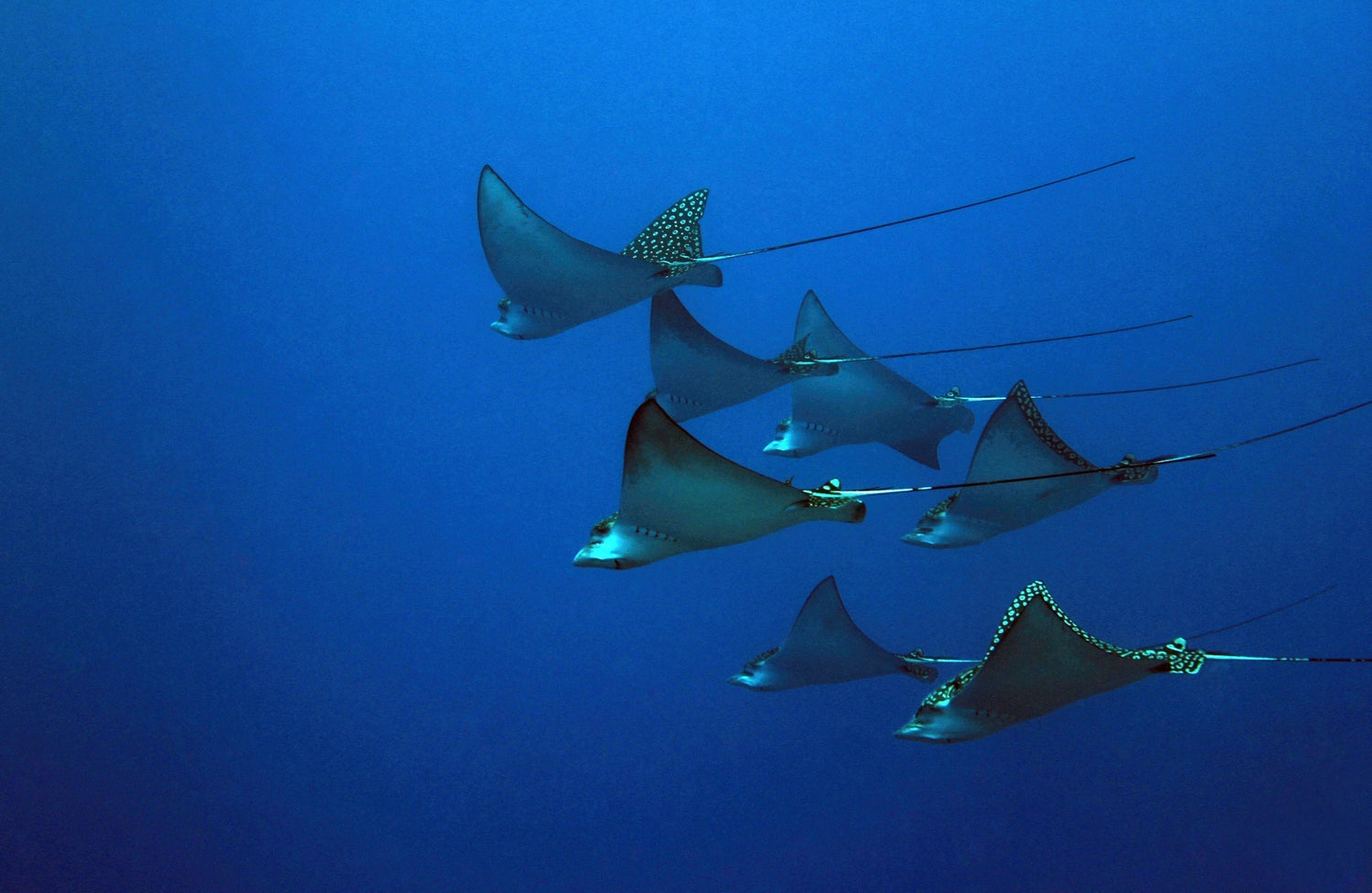
- Eagle rays (spotted, gliding elegantly) and southern stingrays. Eagle rays common in Roatan, Bonaire (east coast sites), Cozumel, and Grand Turk Wall (Turks & Caicos); stingrays famously at Stingray City (Grand Cayman) and Tobago Cays.
- Whale sharks (gentle filter-feeders, up to 40+ ft). Seasonal and rare but possible in southern/western Caribbean: best in Utila (Honduras Bay Islands, Feb-Apr), Gladden Spit (Belize, Apr-May around full moon snapper spawning), and Isla Holbox/Isla Mujeres (Mexico/Yucatan, May-Sep). These are often snorkel encounters rather than dives.

Specialized Experiences
- Tarpon (large, silvery schools in wrecks or channels). Iconic in wrecks around Roatan, Bonaire (night feeds at piers), and Puerto Rico sites like Pink House Reef.
- Macro species on night dives (seahorses, frogfish, nudibranchs, pipefish, shrimp, crabs). Excellent in Bonaire (shore/night dives, e.g., Oil Slick Leap for ostracods/bioluminescence), Saba, St. Lucia (Anse Chastanet/Anse Cochon), St. Vincent & the Grenadines, and Little Cayman/Curacao. Bonaire and Saba stand out for critter-hunting.
- Bioluminescence (glowing plankton or ostracods creating sparkling trails). Magical on night dives or kayaks in Puerto Rico (Mosquito Bay/Vieques, Laguna Grande/Fajardo, La Parguera - some of the world's brightest), Grand Cayman (Bio Bay), Jamaica (Luminous Lagoon), St. Croix (Salt River Bay), and Bonaire (ostracod sites like Oil Slick Leap, especially dark nights).
No matter your level, the Caribbean delivers reliable, accessible diving with something for everyone, whether you're chasing turtles on a relaxed reef dive in Bonaire or hoping for a whale shark flyby in Utila. Protected marine parks (e.g., Bonaire National Marine Park, Belize Barrier Reef) help preserve these habitats, so practice good buoyancy and no-touch policies to keep them thriving.

Dive Types to Experience in the Caribbean
The Caribbean offers an incredible variety of dive experiences, from dramatic vertical walls to fascinating wrecks and gentle drifts. Each type highlights the region's diverse underwater landscapes, marine life, and accessibility for different skill levels. Here's a breakdown of the main types, with standout locations and why they're worth seeking out.
Wall Dives
Wall dives feature steep drop-offs plunging hundreds or thousands of feet into the blue, creating vertigo-inducing views, vibrant coral overhangs, and frequent pelagic sightings like eagle rays, sharks, and turtles.
- Bloody Bay Wall (Little Cayman, Cayman Islands): Often ranked among the world's best walls, with a sheer drop from shallow reefs to over 6,000 feet. Expect colorful sponges, black coral, and abundant fish life.
- North Wall (Grand Cayman, Cayman Islands): Dramatic vertical walls with swim-throughs and caves. Great for spotting turtles and rays.
- West End Wall (Roatan, Honduras): Stunning drop-offs with healthy reefs and frequent large marine encounters.
- French Cay Wall (Turks & Caicos): Starts shallow and drops vertically, known for sponges, gorgonians, and dawn dives with changing light.
- Cozumel walls (Mexico): Sites like Santa Rosa Wall and Palancar offer world-class wall diving with strong currents and eagle rays.
These are ideal for intermediate to advanced divers due to potential currents and depth.

Wreck Dives
Artificial reefs from intentionally sunk ships create habitats teeming with fish, corals, and penetration opportunities for experienced divers.
- Kittiwake (Grand Cayman): A 251-foot former US Navy rescue vessel, upright and accessible in calm, clear water. Perfect for all levels with great photo ops.
- Bianca C. (Grenada): The "Titanic of the Caribbean," a massive 600-foot luxury liner. Advanced only, with intact structures and marine overgrowth.
- Hilma Hooker (Bonaire): A drug-smuggling ship turned reef, encrusted with corals and easy access.
- Captain Keith Tibbetts (Cayman Brac): A 330-foot Russian frigate, home to groupers and eels.
- Superior Producer (Curacao): Upright cargo ship in a harbor, with penetration potential.
Grenada stands out as the "wreck capital" with over 40 sites.
Drift Dives
Drift dives let the current carry you along reefs, covering more ground with minimal effort. Great for relaxed exploration and spotting pelagics.
- Cozumel (Mexico): Famous for easy, exhilarating drifts along walls like Santa Rosa and Palancar. Excellent visibility and eagle rays.
- Tobago (Trinidad & Tobago): Strong drifts with shark sightings and vibrant reefs.
- Roatan and Bay Islands (Honduras): Sites like Morat Wall offer long, scenic drifts through brain corals.
- Curaçao (ABC Islands): Kathy's Paradise, Eastpoint, and Mushroom Forest provide thrilling, current-assisted adventures.
- St. Lucia (e.g., Superman's Flight): Adrenaline-pumping drifts off volcanic plugs.
Best for certified divers comfortable with currents. Operators provide surface markers.
Shark Dives
The Caribbean is a shark hotspot, with reliable encounters from gentle nurse sharks to thrilling tiger and hammerhead feeds.
- Tiger Beach (Bahamas): World-famous for close interactions with tiger sharks, lemon sharks, and Caribbean reef sharks.
- Bimini (Bahamas): Top for great hammerheads, plus silky and bull sharks.
- Turks & Caicos: Frequent Caribbean reef sharks on wall dives, especially West Caicos and French Cay.
- Belize: Abundant nurse, reef, and seasonal whale sharks.
- Jardines de la Reina (Cuba): Pristine parks with silky sharks, reef sharks, and goliath groupers.
Many are baited feeds for reliable sightings. Eco-friendly operators prioritize safety.
Blue Hole Dives
These dramatic sinkholes offer unique geology, from shallow caves to deep drops, with layered visibility and marine life.
- Great Blue Hole (Belize): Iconic 1,000-foot-wide sinkhole explored by Jacques Cousteau. Stalactites, caves, and sharks at depth. Advanced, often combined with nearby walls.
- Dean's Blue Hole (Long Island, Bahamas): World's second-deepest (over 660 feet), popular for freediving but also scuba. Serene and massive.
- Lost Blue Hole (near Nassau, Bahamas): Surrounded by grass beds and critters in shallower water.
These are bucket-list experiences, often requiring good buoyancy and sometimes liveaboards for access.
Night Dives
Night dives reveal a transformed world: active nocturnal creatures, glowing bioluminescence, and macro magic under lights.
- Bonaire (ABC Islands): Shore-accessible piers and reefs (e.g., Town Pier or Oil Slick Leap) for tarpon feeds, octopus, and ostracod bioluminescence. Widely considered the Caribbean's best.
- Curacao (ABC Islands): Sites like Alice in Wonderland, Tugboat wreck, and house reefs with macro critters and conservation nurseries.
- Roatan (Honduras): Bioluminescent organisms and transformed daytime sites.
- Puerto Rico (e.g., La Parguera or Vieques): Combined with bioluminescent bays for magical glow trails.
Excellent for macro enthusiasts. Bring strong lights and good buoyancy.

Liveaboards
Liveaboards maximize bottom time by accessing remote sites, offering multiple dives daily, meals, and variety in one trip. Ideal for covering walls, wrecks, sharks, and more.
- Bahamas (e.g., Aqua Cat): Shark-focused (Tiger Beach), blue holes, and diverse reefs. Often voted top overall.
- Turks & Caicos (e.g., Turks & Caicos Explorer): Pristine walls, sharks, and drift dives.
- Belize (e.g., Aggressor fleet): Great Blue Hole, barrier reef, and whale sharks.
- Cuba (e.g., Avalon or Jardines de la Reina): Protected shark havens and untouched reefs.
- Cayman Islands (multi-island itineraries): Walls, wrecks, and Bloody Bay.
Liveaboards suit serious divers wanting 18-30+ dives per week. Book early for peak season.
The Caribbean's dive types suit beginners to advanced explorers. Many islands combine several (e.g., Cayman Islands for walls and wrecks, Bonaire for night and shore). Protected parks preserve these experiences, so follow no-touch rules. If you're targeting a specific type or island, let me know for more tailored recommendations!
Destination Profiles
Bonaire
Over 85 shore dive sites with excellent visibility. Ideal for independent diving. Home to the Bonaire National Marine Park, which protects the entire coastline and supports thriving reefs full of macro life like seahorses, frogfish, and shrimp. The island's arid climate and protected status keep conditions consistent, with many resorts offering drive-and-dive packages or valet-style services for effortless exploration.

Curaçao
Protected coves and consistent conditions year-round. Features a mix of boat and shore diving, with standout sites including vibrant sponge gardens, the famous Tugboat wreck, and Mushroom Forest's unique formations. The island combines excellent underwater topography with colorful Dutch colonial towns above water, making it a great choice for divers who enjoy cultural outings between dives.
Grand Cayman & Little Cayman
Known for dramatic walls and high visibility. Grand Cayman offers accessible sites like Stingray City for interactive ray encounters and shallow wrecks such as the Kittiwake. Little Cayman boasts Bloody Bay Wall, a world-class drop-off with swim-throughs and pristine corals. The trio of Cayman islands (including quieter Cayman Brac) provides diverse options, from beginner-friendly shallows to advanced wall plunges.
Belize
Part of the Mesoamerican Reef with large marine life encounters. Divers can explore the second-longest barrier reef system, with highlights including the iconic Great Blue Hole sinkhole and nearby atolls rich in sharks, rays, and seasonal whale sharks. The remote Lighthouse Reef and Turneffe Atoll offer uncrowded sites teeming with pelagics and healthy hard corals.
Mexico (Cozumel)
Famous for drift diving and seasonal whale sharks. Strong currents create effortless, exhilarating drifts along towering walls like Palancar and Santa Rosa, with massive coral heads, swim-throughs, and frequent sightings of turtles, eagle rays, and schools of fish. The island's proximity to the mainland adds convenience for combining diving with cultural experiences in the Yucatan.
Roatán
Affordable and diverse reef diving. Part of the Bay Islands along the Mesoamerican Barrier Reef extension, it features healthy slopes, walls, and wrecks like the Aguila. Known for macro critters, tarpon schools, and occasional whale shark passes (especially in Utila nearby), Roatan delivers high-value diving with vibrant resorts focused on underwater time.

Turks & Caicos
Pristine reefs and strong visibility. The islands' walls, such as French Cay and West Caicos, drop dramatically with abundant sponges, gorgonians, and frequent shark and ray sightings. Grand Turk and Providenciales offer calm, clear waters ideal for photography, with humpback whale migrations adding seasonal excitement in winter.
Bahamas
Shark diving and blue hole experiences. Renowned for adrenaline-pumping encounters at Tiger Beach (tiger, lemon, and Caribbean reef sharks) and hammerhead sites around Bimini. Features extensive blue holes, caves, and protected parks like Exuma Cays, plus nurse shark feeds and pristine coral gardens across its many islands.

Common Mistakes to Avoid in 2026
Caribbean diving in 2026 remains as rewarding as ever, but even experienced divers can fall into habits that reduce safety, enjoyment, or marine protection. Here are key pitfalls to watch for, with practical tips tailored to the region's conditions like trade winds, variable currents, and vibrant but fragile reefs.
- Diving in afternoon winds Many islands experience stronger trade winds building through the day, especially on windward sides such as the east coasts of Bonaire, Curaçao, or Roatan. Afternoon boat rides can get choppy, with increased swell making entries and exits uncomfortable or rough, and surface conditions tiring. Opt for morning dives when seas are calmer and visibility often peaks. If afternoon is your only option, choose sheltered sites or shore diving in protected coves.
- Ignoring currents Strong drifts are common on sites like Cozumel walls, Tobago, or St. Lucia's Superman's Flight. Beginners sometimes underestimate them, leading to separated groups, excessive air use fighting the flow, or drifting too far from the boat. Always listen to the dive briefing for current direction and strength, stay with your guide, use a surface marker buoy if needed, and practice relaxed drift techniques rather than finning hard against it.
- Overextending dives Chasing one more turtle or reef fish can push you beyond no-deco limits, low on air, or past planned bottom time, increasing decompression sickness risk or stranding you far from the exit. Stick to your computer's conservative profile, monitor air frequently by checking your SPG every few minutes, and ascend with at least 500 psi reserve. Plan conservative profiles especially on multi-dive days or liveaboards.
- Poor buoyancy control Hovering too low risks kicking up sand, damaging corals, or stirring silt on wrecks. Floating up uncontrollably wastes air and stresses marine life. Many new or rusty divers overweight themselves, leading to constant finning and poor trim. Do a proper weight check at the surface where you float at eye level with empty lungs and nearly empty tank, fine-tune with small BCD adjustments and lung volume, practice horizontal trim, and breathe slowly and deeply to stay neutral without over-relying on the inflator.
- Skipping Nitrox In warm Caribbean waters of 78 to 86°F, enriched air (Nitrox) extends no-deco times, reduces nitrogen loading, and cuts post-dive fatigue, especially valuable on repetitive dives or walls and liveaboards. Many skip it to save $5 to $15 per tank, but the real cost is shorter bottom times and higher fatigue risk. If you're doing 2 or more tanks daily, invest in Nitrox certification, which is often quick and affordable on-island, and use it for safer, longer dives.

Additional quick tips to dodge other frequent issues in the Caribbean:
- Never skip pre-dive buddy checks or briefings. Gear failures or site hazards such as boat traffic and entry points get overlooked otherwise.
- Stay hydrated and limit alcohol the night before. Dehydration amps up DCS risk in tropical heat.
- Avoid touching corals or marine life. Good buoyancy and no-hands policies protect reefs hit hard by bleaching and tourism.
- Book dives with reputable operators who prioritize safety over cramming groups.
When conditions align with calm seas, excellent visibility, and healthy reefs, Caribbean scuba diving delivers an immersive and rewarding experience. With thoughtful planning and the right destination, it becomes one of the most memorable travel experiences available.
Ready to plan your own Caribbean dive adventure? If you’re interested in a guided trip with thoughtful itineraries, small groups, and strong marine conservation focus, feel free to drop us a message on the Osaviva trip enquiry page we’d be happy to help tailor something that fits your dates, experience level, and priorities.
