
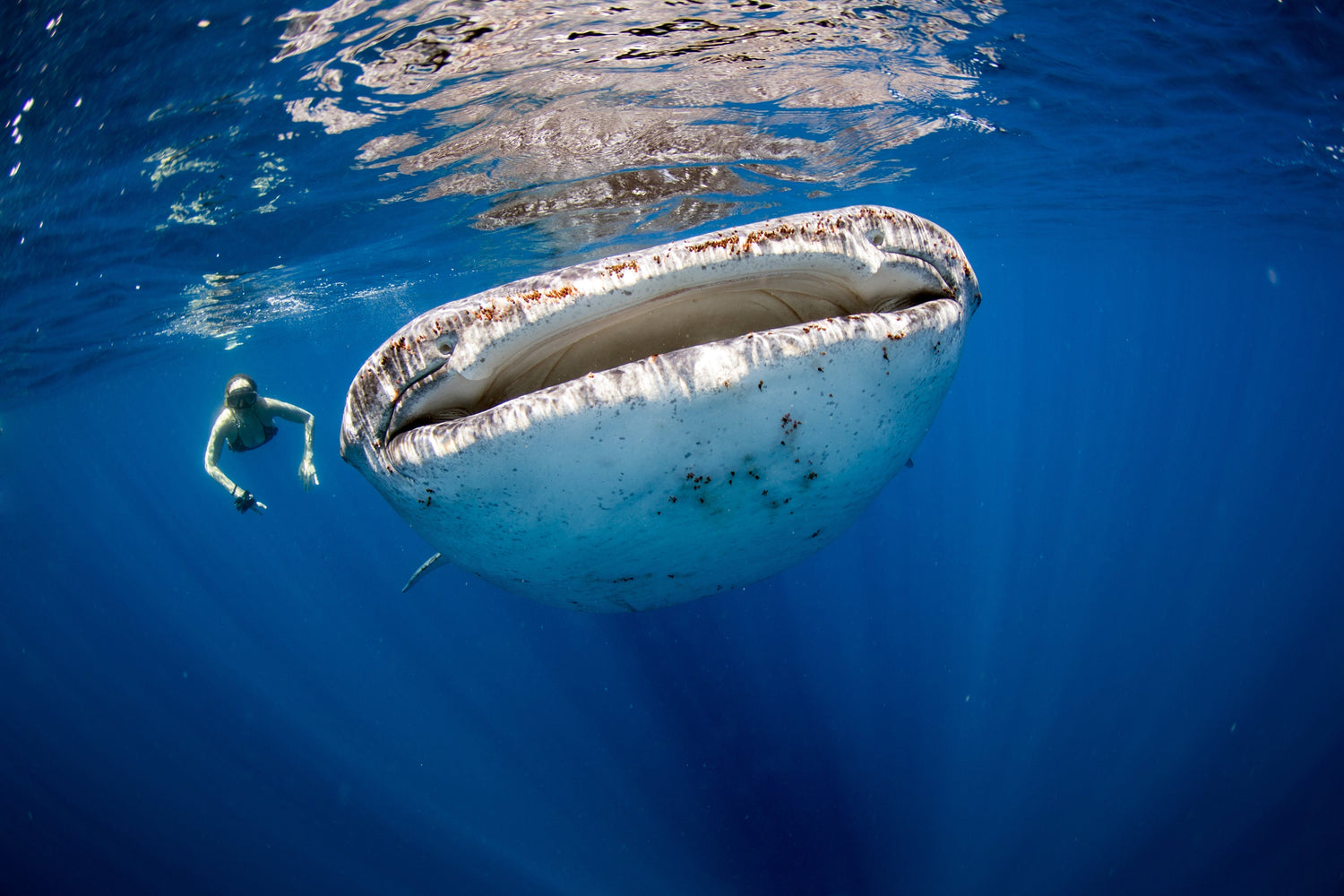
Imagine floating in warm, crystal-clear turquoise water. Below you, a shadow slowly takes form, growing larger and clearer until it resolves into a majestic creature the length of a school bus. A breathtaking pattern of white spots, like a living galaxy, glides peacefully past. This isn't a scene from a movie; it's the real, heart-stopping magic you feel when you swim with whale sharks.
Despite the intimidating “shark” in their name, these gentle giants are completely harmless to humans. And despite the “whale” in their name, they are not mammals. You’re looking at the biggest fish in the entire ocean.
For years, these peaceful encounters were a secret kept by seasoned divers and marine biologists. Today, this incredible adventure is more accessible than you might think. From Mexico to the Philippines, and extending to places like the Maldives, Baja California, and beyond, a growing number of special destinations offer the chance to witness this natural wonder up close and responsibly.
 Meet the Ocean's Gentle Giant: What Exactly Is a Whale Shark?
Whale sharks are the definition of a "gentle giant." They are filter-feeders, cruising through the ocean with their huge mouths open to scoop up tiny food called plankton. You are definitely not on their menu.
To understand their immense size, just picture a school bus floating past you. Growing up to 40 feet long, they are the single largest fish in the ocean. Being in the water with an animal that massive is a humbling, unforgettable moment.
Adding to their magic, each whale shark wears a unique cosmic pattern. The white spots dotting their backs are like a fingerprint, allowing scientists to tell individuals apart. The one you see is truly one-of-a-kind, an individual with its own story, now briefly crossing paths with yours.
The World's Top Whale Shark Hotspots You Can Visit
Whale sharks follow their food, gathering in a few special places around the globe where plankton is abundant. This creates predictable, world-class opportunities for us to respectfully share the water with them. Each destination offers a slightly different adventure, from a quick getaway to a remote expedition, with many prioritizing strict regulations for the animals' well-being.
Here are some of the best and most reliable places in the world to swim with whale sharks, focusing on ethical and sustainable experiences:
Isla Holbox & Isla Mujeres, Mexico
Just off the coast of the Yucatán Peninsula, these islands host the largest known gathering of whale sharks on Earth every summer. Tour boats head out into the deep blue water where you can witness dozens, sometimes even hundreds, of these giants feeding on the surface.
The Philippines
This island nation offers two very different experiences. In Donsol, you can join ethical, community-led tours to find whale sharks in their natural migratory path. Alternatively, in Oslob, local fishermen feed the sharks, which means sightings are practically guaranteed year-round, though it's a more debated practice.
Ningaloo Reef, Australia
If you want to combine your swim with a visit to one of the planet's most stunning coral reefs, this is your spot. In the crystal-clear waters of this World Heritage-listed site in Western Australia, you'll join highly regulated tours that put the health of the reef and its animals first, often hailed as the gold standard for responsible whale shark encounters.

Gladden Spit, Belize
For the truly adventurous, this destination offers something unique. For a few days after the full moon between March and June, whale sharks arrive to feed on fish spawn from the nearby reef. It’s a rarer and more challenging encounter, often sought out by scuba divers.
La Paz, Baja California Sur, Mexico (Sea of Cortez)
One of the most accessible and ethical spots globally, with heavy regulations limiting boats and ensuring natural, non-fed encounters. These graceful giants feed on plankton in the bay's nutrient-rich waters, often alongside sea lions and other marine life, from late fall through spring.
Galápagos Islands, Ecuador
For advanced divers seeking a truly awe-inspiring encounter, the Galápagos offers one of the most powerful whale shark experiences on Earth. These waters are known for sightings of massive adult females, often far larger than those found elsewhere. Encounters typically occur during the cooler, plankton-rich months from June to November and are most often experienced while scuba diving in deeper offshore sites. Strict park regulations, licensed naturalist guides, and tightly controlled visitor limits ensure that these encounters remain conservation-focused and respectful.
Roatán, Honduras (Bay Islands)
Located along the Mesoamerican Barrier Reef, Roatán offers some of the Caribbean’s most accessible and vibrant marine encounters, with dramatic reef walls, clear turquoise water, and thriving biodiversity just minutes from shore. While whale shark sightings here are less predictable than in places like Mexico or the Maldives, seasonal migrations occasionally bring these gentle giants to deeper offshore waters, particularly between February and April. Encounters are typically scuba-based and suited to confident divers seeking a spontaneous, conservation-focused experience rather than guaranteed sightings. Even when whale sharks remain elusive, Roatán delivers world-class diving and snorkeling among coral gardens, sea turtles, rays, and colorful reef fish, making it a rewarding addition for travelers building a broader marine adventure.
South Ari Atoll, Maldives
This tropical paradise stands out for near-year-round possibilities, especially in the protected Maamigili area, where juvenile whale sharks frequent calm, clear waters. Many operators use spotter planes for minimal disturbance, making it a top choice for serene, conservation-focused swims.
Additional standout locations include the Galápagos Islands (Ecuador) for deep, awe-inspiring scuba encounters with massive individuals (often during the cooler plankton-rich months), and emerging ethical options like parts of Komodo National Park (Indonesia) or Tofo (Mozambique), where sightings align with natural migrations rather than artificial feeding.
 When to Go: Your Whale Shark Season Calendar
Because whale sharks are constantly migrating to follow their food, their movements create a predictable “peak season” for each hotspot. Planning your visit during these key months gives you the absolute best chance for an incredible encounter.
| Location | Peak Season for Sightings |
|---|---|
| Mexico (Isla Holbox / Isla Mujeres) | June – September |
| The Philippines (Donsol) | November – May |
| Roatán, Honduras | February – April (variable sightings) |
| Australia (Ningaloo Reef) | March – July (April–July peak) |
| Belize (Gladden Spit) | March – June |
| Mexico (La Paz, Sea of Cortez) | October – April |
| Maldives (South Ari Atoll) | Year-round, best November – April |
| Galápagos Islands (Ecuador) | June – November |
Snorkeling vs. Scuba Diving: Which Is Better for Whale Sharks?
For this adventure, snorkeling is almost always the best and often the only way to go. Most of the world's top whale shark destinations prohibit scuba diving during encounters to protect the animals and their natural feeding behavior.
The reason is wonderfully simple: whale sharks are primarily surface-feeders. They cruise slowly near the top of the ocean, gulping down huge mouthfuls of plankton that gather in the sunlit water. This is where they spend their time, so the best seat in the house is right at the surface with them, where you can get a perfect, unobstructed view as they glide peacefully by.
This is fantastic news for most travelers. You don't need a time-consuming or expensive scuba certification to have this once-in-a-lifetime experience. As long as you are a comfortable swimmer, you’re ready for an encounter. (Note: In places like the Galápagos, deeper scuba dives offer unique views, but surface snorkeling remains the primary way for most ethical tours.)

The Golden Rules: Your Guide to a Safe and Ethical Encounter
Sharing the ocean with a creature this magnificent is a privilege, and with that comes a responsibility to be a respectful guest in their home. The rules for a safe and ethical whale shark encounter are simple. They are designed not only to protect these endangered animals but also to ensure they remain calm, giving you the most magical experience possible.
- Keep your distance: Stay at least 10 feet (3 meters) from the whale shark’s body and 13 feet (4 meters) from its powerful tail.
- No touching, ever: Resist the urge to reach out.
- Turn off your flash: Use natural light only for any photos or videos.
How to Choose a Great Tour Operator (And Avoid Bad Ones)
Your choice of tour operator is the single most important decision for a truly magical and responsible whale shark experience. A great operator acts as a guardian of these gentle giants, prioritizing their well-being over profit so the animals stay calm, wild, and undisturbed. A poor one can turn the encounter into a stressful, crowded free-for-all that harms the sharks and diminishes the wonder for everyone.
The best operators follow strict, science-backed guidelines: small groups (often 6–10 swimmers max), enforced distance rules, no touching or chasing, no artificial feeding, and natural sightings only. They educate guests thoroughly, contribute to conservation (through data collection, research partnerships, or donations), and operate with transparency and eco-credentials. Places like Ningaloo Reef set the benchmark with government-regulated limits, while ethical outfits in La Paz, the Maldives, or Donsol often do the same.
Red flags include promises of "guaranteed" touching or impossibly close photos, marketing images of swimmers piled around sharks, heavy reliance on feeding to ensure sightings, suspiciously low prices, large chaotic groups, or minimal/no briefing on rules and conservation. If they don’t emphasize animal welfare or skip explaining why touching damages the shark’s protective mucus layer, walk away.

Quick pointers to spot the real deal:
- Look for: Small group sizes, detailed pre-swim briefings, no-feeding policy, conservation involvement (e.g., WWF guidelines, local research programs), strict rule enforcement, and reviews praising respect for the animals.
- Avoid: Touching/feeding guarantees, crowded promo photos, rock-bottom prices, no permits or certifications mentioned, rushed operations, or guides who ignore rule-breaking.
- Research tips: Ask direct questions ("Do you follow no-touch rules strictly?"), check recent independent reviews for welfare mentions, and cross-reference with trusted sources like Responsible Travel or local marine conservation groups.
Choosing wisely transforms your swim from a thrill into meaningful, low-impact tourism that helps protect these endangered giants for the future.
Your Whale Shark Trip Checklist: What to Pack
- Reef-safe sunscreen
- Rash guard or swim shirt
- GoPro or underwater camera
- Anti-nausea medication
- Towel and dry clothes
- Reusable water bottle
 Your Adventure Awaits
What might have once felt like a distant dream is now a real adventure within your reach. The moment you slip into the water and see a shadow the size of a school bus gliding peacefully beneath you is one that will stay with you forever.
Plan Your Whale Shark Journey with Osaviva
Swimming with whale sharks is not just about choosing a destination. Timing, ethical operators, seasonal migrations, and the right itinerary design all shape the experience. At Osaviva, we design tailor-made journeys that combine extraordinary wildlife encounters with seamless logistics, carefully vetted guides, and responsible travel practices that put conservation first.
If you are ready to start planning your own unforgettable whale shark adventure, you can begin your journey here: Start your custom trip enquiry.
