
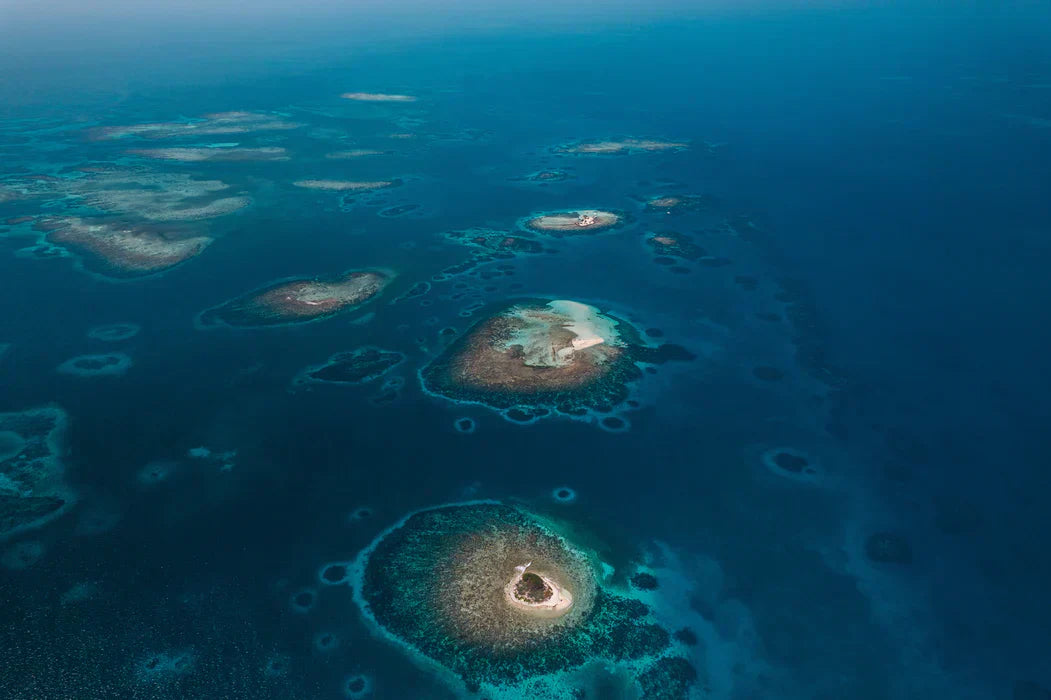
Diving and Snorkeling the Belize Barrier Reef: A Complete Guide
The most famous site on the Belize Barrier Reef is an experience many travelers should probably skip. While the Great Blue Hole is an icon for expert divers, its deep, dark waters offer little for snorkelers or beginners. This raises a far more important question for your trip: what’s the best way for you to experience this underwater wonderland?
Snorkeling vs. Diving in Belize: How to Choose
Your choice really comes down to snorkeling vs. diving in Belize. Snorkeling is your ticket to the sunlit upper world of the reef. It requires no special training, making it perfect for families and anyone wanting to float above vibrant coral gardens teeming with colorful fish like yellowtail snapper.
To explore the reef’s deeper canyons and see creatures like sleeping nurse sharks, you’ll want to dive. While getting PADI certified in Belize is a popular goal, it isn't your only option. Most dive shops offer a “Discovery Dive,” a safe, instructor-led experience that lets you try scuba for a day with no certification required.
To help you decide, here is a simple breakdown of the options:
- Snorkeling: No certification, lower cost, for seeing the reef's sunlit surface.
- Discovery Dive: A one-day taste of diving, no prior experience needed.
- Certified Diving: Full certification needed for access to deeper, more complex sites.

Top Dive & Snorkel Sites in Belize
Hol Chan Marine Reserve (Ambergris Caye / Caye Caulker)
A protected “reef sampler platter” with dependable fish life and generally calm, clear conditions. It’s one of the easiest places to see healthy coral gardens, schools of snapper, and the classic Caribbean reef mix, which is great for first-timers and families. The downside is popularity: it can feel busy at peak hours, so timing and operator choice matter.

Shark Ray Alley (near Hol Chan)
A shallow sandy channel where nurse sharks and southern stingrays cruise in close proximity to snorkelers. It’s typically a short stop paired with Hol Chan, and the wildlife interaction is the main draw rather than coral structure. Go with an operator that keeps the group controlled and emphasizes respectful distance.
Mexico Rocks (north of Ambergris Caye)
An easy, beginner-friendly snorkel over coral heads (“rocks”) scattered across a shallow sand flat. Visibility is often good, and it’s a nice place to practice relaxed snorkeling while spotting reef fish and the occasional ray. It’s also a solid option when you want something lower-key than the marine-reserve circuit.
Bacalar Chico National Park & Marine Reserve (far north Ambergris)
A more “wild” day trip feel with fewer boats than the central Ambergris/Caulker sites. It offers a mix of reef, patch reefs, and channels, and is often marketed to travelers who want a quieter experience and are comfortable with a longer ride. Great pick if you’ve already done Hol Chan and want to level up without going full atoll-remote.
Turneffe Atoll (general diving & snorkeling)
Belize’s largest atoll is known for variety: shallow reef tops for snorkeling, plus deeper edges and walls for divers. It’s a favorite for travelers who want better chances at bigger sightings (depending on season and conditions) and a more “expedition” feel than near-shore tours. Many private-island dive resorts base here, which can mean earlier starts and fewer crowds.

The Elbow (Turneffe Atoll)
One of Turneffe’s most famous areas, often associated with stronger currents and more advanced diving days. When conditions line up, divers come here hoping for bigger pelagic action and dramatic reef scenery along the atoll’s edge. Not an ideal choice for brand-new divers, but a top “step up” site for experienced ones.
Lighthouse Reef Atoll (general sites)
A remote atoll with striking color and clarity on good days, offering a feeling of being far from everything. Trips here are typically longer and more weather-dependent, but the payoff is a more pristine, big-ocean experience. Many itineraries combine multiple Lighthouse stops in one day.
Great Blue Hole (Lighthouse Reef)
Best understood as a geologic spectacle rather than a “most colorful reef” dive. For divers, it’s an advanced-leaning, deep profile focused on stalactites and the scale of the sinkhole—not coral gardens. If you want the iconic view without the dive logistics, a fly-over (shared plane, private flight, or private helicopter) is often the most visually impressive way to experience it.

Half Moon Caye Wall (Lighthouse Reef)
Frequently cited as one of Belize’s most rewarding dives: a dramatic wall with lively reef structure and the potential for turtles, rays, and cruising reef fish. Visibility can be excellent, and the wall profile makes it feel expansive and cinematic. Many Blue Hole day trips pair the Blue Hole with Half Moon Caye to deliver a “best of both worlds” day.
Long Caye / “Aquarium” area (Lighthouse Reef)
Known for dense reef fish life and clear, bright-water conditions when weather cooperates. The name “Aquarium” gets used for a few spots in Belize, but the general idea is the same: high fish density, photogenic color, and a fun, high-reward snorkel or dive when the sea is calm. Excellent choice if your priority is marine life over bucket-list bragging rights.
Glover’s Reef Atoll (general sites)
Remote, protected, and often described as one of the more pristine reef experiences Belize offers. It’s a great fit for confident snorkelers and divers who want fewer boats and more “untouched” feel, with beautiful coral structure and strong visibility on good days. Because it’s farther out, it tends to suit travelers with more time (or those staying at an atoll-based property).
South Water Caye Marine Reserve (Hopkins / Dangriga area)
A standout option for travelers basing on the mainland who still want genuinely good reef days. Expect enjoyable snorkeling over reef structure plus dive sites that make the trip worthwhile without having to go all the way to the northern cayes. It’s also a strong choice if you want to combine reef time with inland adventures from Hopkins.
Tobacco Caye (South Water Caye area)
A tiny caye area used as a jumping-off point for nearby snorkeling and diving within the reserve. The draw is convenience and quick water access—great if you want that “step off the dock and you’re in reef country” rhythm (even when you’re not on a private island). Often paired with relaxed, unhurried days on the water.
Silk Cayes (off Placencia)
A southern favorite for postcard water and satisfying snorkeling, often praised for feeling more open and less hectic than the most famous northern stops. Conditions can be beautiful for both casual snorkelers and more serious swimmers, and it’s frequently packaged as a full-day “best of the south” reef outing. Good pick when you want a big, memorable snorkel day from Placencia.

Gladden Spit Marine Reserve (Placencia area)
Most famous for seasonal whale shark snorkeling/diving opportunities around spring full moons when fish spawn draws them in (sightings are never guaranteed). Outside whale shark season, it’s still a respected dive area with strong marine-life potential. This is one of the best “plan your timing around it” sites in Belize if swimming with whale sharks is a top goal.
The Ultimate Dive: Is the Great Blue Hole Worth It for You?
That iconic, perfect circle of sapphire blue water, visible even from space, makes the Great Blue Hole one of the most legendary dive sites on Earth. While snorkelers can explore the shallow reef fringing its edge, the main event is a deep, technical dive reserved for experienced adventurers only. Before you book, it's crucial to understand what this unique trip truly entails, as the experience is geological, not biological.
If you don’t want to dive (or you’re traveling with non-divers), a fly-over is the best alternative, and arguably the most visually rewarding way to experience the Blue Hole’s perfect circular shape. You can book a shared scenic flight, upgrade to a private plane, or splurge on a private helicopter tour. It’s quick, weather-dependent, and delivers the classic “wow” view without the long boat ride or deep-water logistics.

The Blue Hole isn't a colorful coral garden but a massive underwater cavern whose roof collapsed thousands of years ago when sea levels were much lower. It's essentially a flooded sinkhole, a deep blue chasm plunging over 400 feet into the seafloor. The main attraction lies in its ancient past: divers descend into the quiet darkness to witness colossal stalactites, stone formations like giant icicles that prove this cave was once dry land. It feels less like a reef dive and more like exploring a submerged, prehistoric cathedral.
This unique environment demands specific skills. To participate, you must have an Advanced Open Water certification, as the dive typically reaches a depth of 130 feet (40 meters). The time spent at that depth is very short, often just five to seven minutes, before a slow, careful ascent. The focus is purely on witnessing the sheer scale and eerie beauty of the rock formations, not on interacting with abundant marine life.
So, is it worth it? For experienced divers who are fascinated by geology and looking for a true "rite of passage," the high cost and long boat ride (often three hours each way) are a small price for such a profound experience. However, if your dream is to swim among vibrant corals and schools of fish, your time and money are better spent exploring the shallower, livelier sites along the barrier reef.
Where Beginners Can Fall in Love with Diving
If the deep, dark Blue Hole sounds a bit much, don’t worry. The real magic for most divers, and the perfect place to get certified, happens in the sunlit, shallow waters just off the coast of cayes like Ambergris Caye and Caye Caulker. Here, the reef is a vibrant, bustling city of color, offering an experience that’s a world away from the Blue Hole’s quiet, geological grandeur. The goal isn’t depth, rather an immersion in a kaleidoscope of life.

Dreaming of getting certified on your trip? If you are, it helps to understand what an Open Water Diver course actually involves. It’s not just a couple of boat dives: you’ll need time for knowledge learning (often eLearning or classroom), confined-water skills (pool or calm shallow water sessions), and then multiple open-water training dives where you repeat skills under an instructor’s supervision. Even when it’s run efficiently, it typically takes several days, so it can easily crowd out other plans, especially if you’re juggling travel days, weather, or family schedules.
The commitment to dive certification is often too much for travelers who don't have a few weeks to spend away, so if that's you, ask a dive shop about a Discover Scuba Dive instead. It’s a guided, beginner-friendly experience with a minimal classroom/briefing component, and you can often book it with a private divemaster or instructor for extra comfort and attention. You’ll still get the thrill of breathing underwater and seeing the reef up close, without committing a big chunk of your vacation to a full certification.
Your first dives will focus on mastering buoyancy, that incredible feeling of floating weightlessly as if you’re an astronaut exploring another planet. You’ll likely experience your first wall dive, drifting effortlessly alongside a vertical coral cliff that drops into the brilliant blue. Many sites feature "spur-and-groove" formations, essentially underwater canyons of coral separated by sandy rivers, where you can spot graceful eagle rays, sleepy nurse sharks, and sea turtles munching on seagrass. It's a dynamic and endlessly fascinating landscape.
These calmer sites are perfect for building confidence while seeing the world-class marine life that makes Belize famous. When you walk into a dive shop, you don’t need to know the name of a specific site; just tell them you’re a beginner looking for a beautiful, shallow dive. They’ll know exactly where to take you. Once you get comfortable in these coral gardens, you’ll find Belize offers adventures for every level, including the chance to swim with the biggest fish in the sea.
How to Swim with the Biggest Fish in the Sea
The biggest fish in the sea isn't a toothy predator, but a gentle, school-bus-sized giant. The whale shark, despite its name, is a harmless filter-feeder, gliding through the water with its cavernous mouth open to scoop up tiny plankton and fish eggs. Swimming alongside one is a truly humbling and unforgettable experience, and Belize is one of the best places on Earth to do it, offering a glimpse at the impressive marine life in the Belize Barrier Reef.
This incredible event is tied to a specific time and place. During the spring full moons, typically in April and May, massive schools of snapper gather to spawn near the Gladden Spit Marine Reserve off the coast of Placencia in Southern Belize. The whale sharks arrive to feast on the eggs, creating a rare window of opportunity for snorkelers and divers. This makes the whale shark season in Placencia one of the most sought-after marine encounters in the world.

Because this is a protected natural wonder, encounters are strictly managed to keep both you and the sharks safe. Tour operators enforce a "no touching, no chasing" policy, ensuring the animals are not stressed. Remember, these are wild creatures, and sightings are a matter of luck and timing, not a guarantee. The privilege of sharing the water with them, however brief, is the true prize. This unique southern Belize experience highlights just how important it is to choose the right home base for your adventure.
Where to Stay: Choosing Your Belize Basecamp
Choosing your home base is a crucial step in planning your Belize trip, as each popular hub offers a completely different experience. Your decision will shape your vacation’s vibe, budget, and daily logistics. The four main contenders are Ambergris Caye, Caye Caulker, Hopkins, and Placencia, and picking the right one is all about matching a location to your travel style.

Ambergris Caye
For a lively atmosphere with the most amenities, Ambergris Caye is the bustling heart of Belize’s island tourism. It’s home to the town of San Pedro, bustling with golf carts, fantastic restaurants, and a wide variety of hotels, including all-inclusive dive resorts. Its proximity to Hol Chan and Shark Ray Alley means reef adventures are just a short boat ride away.

Hopkins
For a quieter, culture-forward base on the mainland, consider Hopkins. This laid-back Garifuna village has an easygoing beach scene, great local food and drumming culture, and straightforward access to adventures inland (jungle, rivers, waterfalls) while still being well-positioned for reef days. From Hopkins you can book snorkel and dive trips to the nearby offshore cayes and protected areas, including the South Water Caye Marine Reserve.

Caye Caulker
If a more relaxed, budget-friendly trip is your goal, Caye Caulker is your answer. Just a short water taxi from its bigger sibling, this smaller island lives by its famous motto: "Go Slow." The vibe here is distinctly backpacker-chic and laid-back. When comparing Ambergris Caye vs. Caye Caulker for diving, both offer fantastic access, but Caulker provides a quieter, more rustic base.

Placencia
Far to the south, the mainland village of Placencia offers the best sandy beaches but requires a longer boat trip (about an hour) to reach the main barrier reef.
To make the decision easier, here’s a quick breakdown:
-
Ambergris Caye
Vibe: Lively & Resort-Focused
Cost: $$-$$$
Reef Access: 10-20 minutes -
Caye Caulker
Vibe: Laid-Back & Budget-Friendly
Cost: $
Reef Access: 15-30 minutes -
Placencia
Vibe: Quiet Village & Beach-Focused
Cost: $$-$$$
Reef Access: ~60 minutes -
Hopkins
Vibe: Relaxed village + culture + easy inland adventures
Cost: $$-$$$
Reef Access: day trips to offshore cayes/reserves (typically longer than Ambergris/Caulker, often comparable to southern options)
Private Islands and Dive Resorts: The All-In Reef Escape
If you want the reef at your doorstep, without planning day tours, water taxis, or restaurant logistics, Belize’s private islands and dedicated dive resorts are the easiest way to turn a reef trip into a true getaway. This style of stay is especially popular with serious divers, couples seeking quiet luxury, and travelers who’d rather bundle everything into one smooth itinerary.

What it’s like
Most properties sit on small cayes or offshore atolls (often Turneffe Atoll or near the southern cayes). Days revolve around boat schedules: morning dives, afternoon snorkels, sunset paddles, and early dinners. The vibe is peaceful and remote great for disconnecting, not ideal if you want nightlife access to shopping.
What’s usually included (varies by property)
- Airport/boat transfers or coordinated pickup
- Meals (sometimes full board) and non-motorized water sports (snorkel equipment, hobie cats, paddleboards, sea kayaks)
- Dive packages (multi-day) and/or guided snorkeling trips
- On-site gear rinse/storage, and easy access to private dive and snorkel sessions
Why it can be worth the splurge
You’ll often get smaller groups, earlier departures, and access to excellent sites with less crowd pressure, plus the option to book a private divemaster/boat if you want a more tailored pace.
Before you book, ask
- How many dives/snorkel trips are included per day, and what sites are typical?
- Are there house reefs you can snorkel from shore/dock?
- What’s the cancellation policy for weather, and what alternatives are offered?
- Is it diver-focused, family-friendly, or couples/quiet-forward?
Private-Island & Atoll Dive Resorts (Mid-Luxury to High-End)
Dive-forward, remote (best “reef-first” stays)
- Turneffe Island Resort (Turneffe Atoll): classic upscale dive resort; strong dive operation and easy, repetitive reef time.
- Blackbird Caye Resort (Turneffe Atoll): relaxed, comfortable dive resort vibe; great for couples/groups who want simple all-in diving.
Private-island luxury (comfort-first, diving/snorkeling arranged at a high level)
- Cayo Espanto (private island, near Ambergris): ultra-luxury, fully customized; ideal if you want private guides/boats and maximum privacy.
- Thatch Caye (private island, near Belize City/Dangriga): upscale private-island experience with strong snorkeling/diving trip options.
- Ray Caye Island Resort (south, near Placencia): private-island feel with excellent access to southern cayes/marine reserves.
- Coco Plum Island Resort (private island): adults-only, polished all-inclusive style; easy to add dive/snorkel days without effort.
High-End Dive-Forward Resorts & Hotels (Cayes + Mainland)
Ambergris Caye (San Pedro) — upscale base with top operators
- Victoria House: boutique luxury with an established dive shop/concierge setup.
- Matachica Resort: adults-oriented, design-forward; great for guided reef days + downtime.
- Alaia Belize: modern luxury; easy to pair with dive/snorkel operators and amenities.
Placencia — high-end mainland base for southern reef access
- Turtle Inn: iconic luxury; excellent for curated dive/snorkel days and a romantic pace.
- Naïa Resort & Spa: upscale, quiet, beach-lux; strong concierge for reef trips.
- Itz’ana Resort: polished, marina access, easy logistics for boating-focused days.
Hopkins — mid-lux “dive + inland adventure” sweet spot
- Hamanasi Adventure & Dive Resort: one of the best fits for mid-lux to high-end travelers who want reef days plus waterfalls/jungle without switching hotels.
High-End “All-In Diving” Alternative
- Belize Aggressor (liveaboard): premium option if you want to maximize dives across atolls with zero commuting from a home base.

When to Go and What to Pack for Your Belize Reef Trip
Deciding on the best time of year to visit Belize involves a simple trade-off between weather and crowds. The dry season, from December to May, offers sunny skies and the calmest seas, making it the most popular (and expensive) time. For lower prices and fewer people, consider the "green" season from June to November. You might encounter afternoon rain showers, but they rarely last all day, and the reef is just as beautiful.
Once your dates are set, packing for a Belize snorkeling vacation goes beyond just a swimsuit. To make your trip more comfortable and protect the environment, a few key items are essential:
- Reef-safe sunscreen: This is non-negotiable. Standard sunscreens contain chemicals like oxybenzone and octinoxate that are extremely harmful to coral. You can help protect the reef by choosing a mineral-based sunscreen with "non-nano zinc oxide."
- Long-sleeve rash guard: Protects you from the strong tropical sun while in the water, reducing the need to reapply sunscreen constantly.
- Waterproof bag or phone case: A must-have for boat trips to keep your valuables dry.
- Polarized sunglasses: Cuts the powerful glare off the water, saving your eyes.
- Insect repellent: Crucial for comfortable evenings on the cayes.
How to Be a Responsible Reef Visitor
By understanding the different ways to experience the reef and where to go, you also have the knowledge to be a responsible visitor. Your actions, no matter how small, have a direct impact on this delicate underwater ecosystem.
This begins before you even pack your bags. The simplest and most impactful first step is choosing a tube of reef-safe sunscreen. This one small purchase makes your footprint a gentle one and supports Belize Barrier Reef conservation efforts from the moment you arrive.
Once you slip into the warm turquoise water, you are a guest in a fragile, living world. Giving coral and wildlife their space, never touching or chasing animals, and following your guide’s instructions transforms your swim into a respectful partnership. By being mindful, you help ensure the reef’s vibrant magic remains for everyone for generations to come.
