
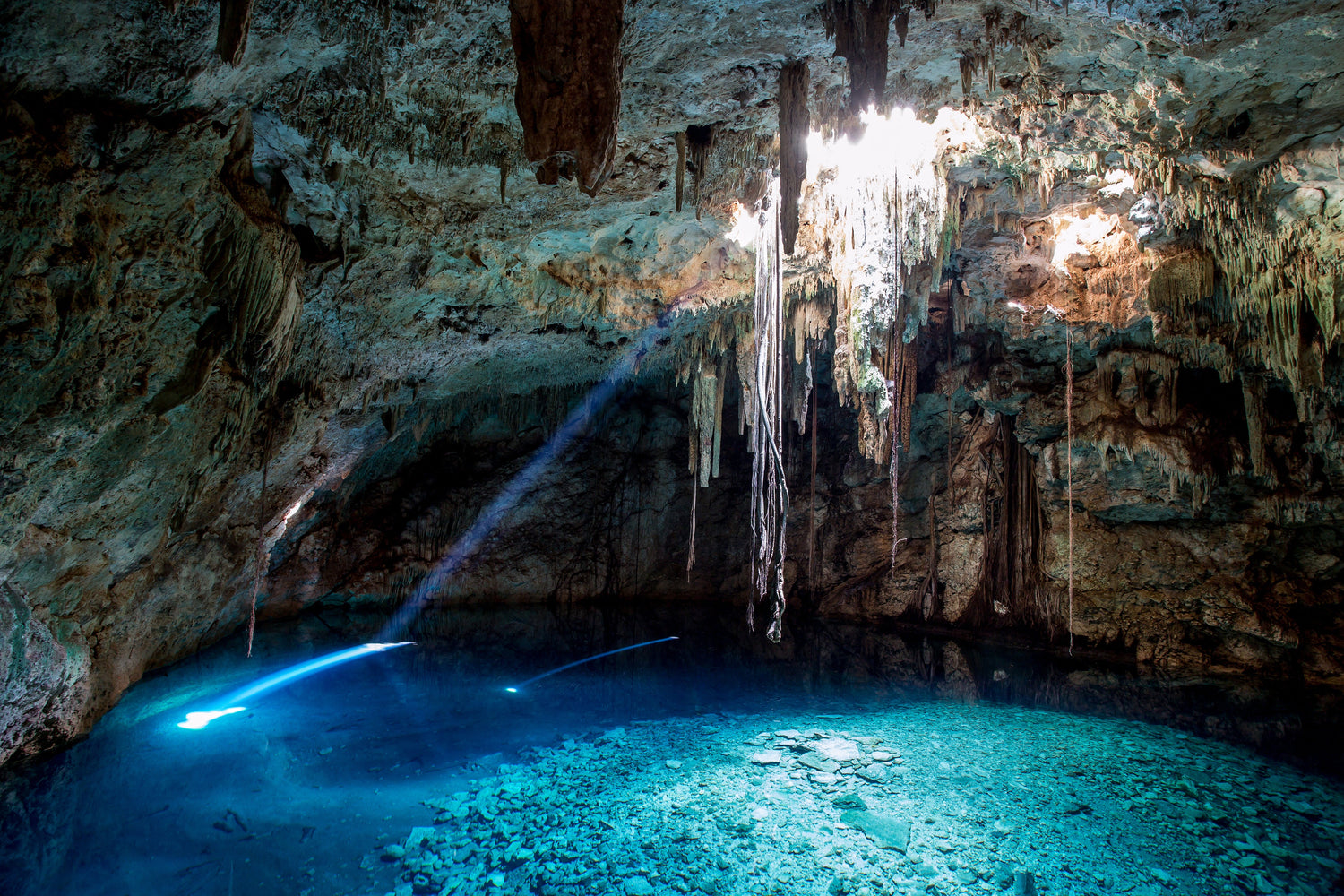
If you haven’t yet had the pleasure of visiting a cenote, picture this: you step off a hot jungle path, climb onto a wooden ladder, and descend into the shadowy depths of the earth, where the scent of damp limestone hangs in the air. A single beam of sunlight illuminates a pool of clear turquoise water.
Beneath the jungle in Mexico, the Great Maya Aquifer is a living network of interconnected waterways that the ancient Maya believed were sacred portals to Xibalba, the underworld. This guide is for nature lovers, couples seeking romance, families who enjoy gentle adventure, divers and snorkelers, and those who crave experiences but want to skip the crowds.
 The Insider Choice: Tulum or Valladolid?
The Yucatán is home to two main cenote regions, each with its own personality. Tulum, with its easy beach access and polished facilities, is the more commercialized of the two. Here, you’ll find plenty of dining and accommodation options, and most cenotes are a breeze to reach, with parking, lockers, and well-kept trails. The flip side is that these conveniences come with higher prices and, in the most popular spots like Gran Cenote or Dos Ojos, the inevitable presence of tour buses and crowds.
Valladolid’s cenotes, by contrast, tend to be easier on the wallet and attract far fewer visitors. There’s a sense of intimacy here, a feeling that you’ve stumbled onto something secret and special, maybe even a little closer to what the Maya themselves might have experienced. With more space to breathe, you may even find yourself alone in the water, especially if you visit on a weekday, either right at opening or later in the afternoon.
For a well-rounded Yucatán adventure, consider splitting your time between the coast and the interior. A few nights by the beach lets you soak up the sun and sea, while a stay inland opens up the world of cenotes and the wonders of Chichén Itzá.
 Quick Comparison
Tulum area
Notable cenotes: Gran Cenote, Dos Ojos, Cenote Calavera.
Average entry: $15–25+ USD.
Vibe: High traffic, busy, convenient, more amenities.
Valladolid area
Notable cenotes: Oxman, Xkeken (Dzitnup), Zaci, plus quieter gems.
Average entry: $3–12 USD.
Vibe: Moderate to low traffic, rustic or hacienda settings, cavernous and atmospheric.
 What Are the Best Cenotes for Your Travel Style?
- For couples on honeymoon or anyone seeking a romantic escape, Xkeken and Oxman stand out. Both offer dramatic light and lush surroundings, with a quieter, more intimate atmosphere that invites you to slow down and savor the moment. The way sunlight dances on the water, and the feeling of stepping into another world, make these cenotes feel truly special, without the pressure of crowds.
- Families will appreciate Cenote Azul or Gran Cenote near the coast, where easy access and shallow, fish-filled waters make for a fun and relaxed swim. In Valladolid, Zaci is a playful city-center option, complete with jumping platforms and a laid-back local vibe. Life jackets are usually available or required, so everyone can enjoy the water safely.
- If adventure or diving is what you’re after, Dos Ojos and Angelita are top picks. Both offer extensive cave systems and the mesmerizing halocline effect, delivering world-class cavern diving experiences with expert guides.
- For photographers, semi-open cenotes like Oxman or Ik Kil near Chichén Itzá are a dream, with their vertical walls, hanging vines, and shafts of light. Arriving early gives you the best chance at perfect light and a quieter scene.
- If peace and privacy are your priorities, look to the lesser-visited cenotes near Valladolid, like Xcanahaltun or other community-run sites, where you can truly unwind.
Standout Cenotes Worth Your Time
Iconic, but expect the crowds
Ik Kil, near Chichén Itzá: Dramatic open cenote with vertical walls and hanging roots. Worth seeing, but go at opening to beat tour buses.

Dos Ojos, near Tulum: Excellent for snorkelling or cavern diving through light-filled tunnels. Popular and best early.

Gran Cenote, Tulum: Welcoming first-timer spot with clear water and turtles. Gets busy; arrive right at opening.
Less busy must-sees
Cenote Oxman, just outside Valladolid, is a favorite for good reason. Set on the grounds of a hacienda, it features a dramatic drop, tangled roots hanging from above, a classic rope swing, and a nearby pool for lounging. The atmosphere is relaxed, with a strong visual impact that invites you to linger for hours. For the best experience, plan to arrive early or in the late afternoon.

Cenote Xkeken (Dzitnup), also near Valladolid, is a true highlight. This enclosed cave is pierced by a single, powerful shaft of light that illuminates turquoise water and dramatic stalactites, creating an atmosphere that feels genuinely sacred. Combo tickets with neighboring Samula are often available. Visit early or late in the day for quieter moments and the most magical light.
Cenote Zaci, right in the heart of Valladolid, is semi-open and easy to access, with jumping platforms and a friendly local vibe. It’s affordable and perfect for a relaxed swim between exploring the city’s colorful streets.
If you’re traveling with a rental car, keep an eye out for Xcanahaltun, Secreto Maya, or other community-run or hacienda cenotes. These hidden gems are well worth the detour.
 The Three Faces of Cenotes & the Magic Below
Every cenote tells a geological story. Young cave cenotes still have intact ceilings. They’re dark, cathedral-like spaces filled with stalactites, ideal for adventurous snorkelling or diving.
Semi-open cenotes have partial collapses, blending rock drama with shafts of sunlight. These often suit photography and relaxed swimming.
Fully open cenotes feel like sunny lagoons: warmer, wildlife-rich, and perfect for easy floating.

Venture deeper into many cenote systems and you may come across a halocline, the visible boundary where lighter freshwater floats above denser seawater. The shimmering effect can look like an underwater mirage. In places like Angelita, layers of hydrogen sulphide create the illusion of a river flowing beneath the surface. Move slowly and gently here; strong kicks can stir up the layers and cloud the water for everyone.
 Practical Planning
Best timing
Arriving early in the morning, right at opening (usually 8 or 9 am), or later in the afternoon after 3 or 4 pm, rewards you with fewer crowds and the most peaceful light. Weekdays are quieter than weekends. The dry season, from November through April, brings clear days and more visitors, while the green season means lush surroundings, fewer people, and the occasional shower.
What to bring
- Swimsuit (wear it under clothes to save time)
- Quick-dry towel or sarong
- Cash (many sites are cash-preferred or only)
- Water shoes or reef-safe sandals for slippery ladders and rocks
- Your own snorkel mask (rentals available, but fit varies)
- Rash guard or reef-safe, biodegradable sunscreen (many sites ban conventional chemicals)
- Reusable water bottle and light snacks
- Dry bag for phone/camera
It’s best to leave valuables at your accommodation. Many cenotes require or strongly encourage a shower before you enter, helping to keep the water clean and pristine.
Safety & Sustainability
Cenotes are generally safe when you follow the rules. The water stays a constant 25°C (77°F).
Some cenotes have slippery entries and deep water, but life jackets are usually available to rent if you’re not a confident swimmer. It’s important not to touch the rock formations, feed wildlife, or use any chemicals, including insect repellent or sunscreen, in the water. Many people still consider these places sacred, so keeping voices low in enclosed spaces shows respect.
Getting around
A rental car or private driver gives the most flexibility to time your visits and reach more hidden spots. Guided tours work well for diving, families, and to pack as much into a short period as possible, as they often stack cenote visits with other activities, like ruins and snorkelling.
 Sample 4-Day Cenote-Focused Itinerary
Day 1: Arrival + Easy Coastal Start
Settle in Tulum or Riviera Maya. Late afternoon or next morning at Gran Cenote or Cenote Azul for relaxed swimming and fish “pedicures.”
Day 2: Cave Adventure
Dos Ojos or Dreamgate for stalactites and light beams. Snorkel or dive with a certified guide if desired.
Day 3: Transfer to Valladolid + Inland Cenotes
Morning at Oxman for jungle drama and rope swing. Afternoon at Xkeken for the magical light shaft and enclosed serenity. This day highlights the quieter side of the Yucatán.
Day 4: Chichén Itzá + Iconic Open Cenote
Early visit to the ruins, then Ik Kil (or a less-visited alternative) before tour buses dominate. Cool off and photograph the dramatic open setting.
 Snorkelling & Diving in Cenotes
Snorkelling requires no certification and is best in open and semi-open sites. You will glide over clear shallows, watch fish, and sometimes spot turtles. Top accessible picks include Gran Cenote and Cenote Azul.
Diving in cenotes ranks among the world’s most distinctive experiences: floating through ancient tunnels, past stalactites, and through shimmering haloclines. Most tourist-accessible dives are cavern dives within natural-light zones, with a certified guide. Popular sites cluster near Tulum, with Dos Ojos, El Pit, and Angelita crowd favourites. Minimum Open Water certification is typically required; many operators prefer Advanced Open Water plus logged dives. Strict no-touch, single-file, buoyancy-control rules protect the fragile environment.
 The Deeper Invitation
The best cenote days aren’t about seeing all the famous ones. They’re about making smart choices: choosing the right sites for you, timing your visits to avoid the busy rush, and leaving yourself enough time to enjoy it. At Osaviva, we put together these kinds of custom itineraries in Mexico all the time. If you’d like help mapping one that fits your group perfectly, just reach out. We’ll take care of the details.
The water is waiting.
