
15 Best Wildlife Experiences in Central America & the Caribbean
Imagine drifting through a rainforest where every branch holds hidden eyes. Or slipping into warm Caribbean waters as something enormous glides beneath you. These moments define wildlife travel here. They feel raw, unscripted, and deeply personal.
This narrow isthmus bridges two continents. It rose from the sea millions of years ago and became nature’s busiest intersection. Today it holds roughly 7% of the planet’s biodiversity on just 0.1% of its surface.
Anyone can photograph a sleeping iguana. A memorable journey demands more. It asks you to trade selfies for silence and chasing for observation. The best experiences come when you move as a silent guest, not an intruder. Only then do the hidden rhythms appear.
This guide gathers some of the region’s most powerful wildlife experiences in Central America and the Caribbean. From misty cloud forests to vibrant coral reefs, each encounter is grouped by ecosystem so you can match it to your own desires.
Rainforest Wildlife Experiences in Central America
 Sloths in the Canopy
Near Manuel Antonio, sloths hang like misplaced shadows in the canopy, almost invisible against the tangle of leaves and vines. Their legendary stillness is survival instinct. Because they feed almost exclusively on low-calorie leaves that take weeks to digest, their metabolism is extraordinarily slow, so they move only when absolutely necessary.
From the deck of a private rainforest lodge, stop searching for motion. Instead, scan for dark, motionless clumps that seem to block the sunlight. A distinctive bandit mask identifies the three-toed sloth, while the two-toed variety has a rounded, pig-like snout.
Best experienced with a private naturalist guide who knows the individual trees they frequent, these encounters reward patience and a slower pace, teaching you to see the forest the way the sloths do. One deliberate moment at a time.
Expert Insight: Sloths are most active at dawn and dusk. Midday sightings are usually just sleeping forms high in the canopy.

The Jaguar's Shadow
Jaguars are rarely seen, but their presence is felt everywhere. In Cockscomb Basin, fresh tracks reveal a wide, trapezoidal pad unlike any puma’s. It's clear evidence that one of the rainforest’s most elusive apex predators passed this way.
Night hikes with a skilled local guide turn the forest floor into a story written in mud and silence. Every print, scat, and claw mark becomes a clue as you move quietly through the darkness, learning to read the subtle signs these solitary cats leave behind.
The real thrill lies not in a guaranteed sighting, but in knowing you are walking the same trails as one of the most powerful animals in the Americas.

The Jungle’s Alarm Clock: Howler Monkeys
The deepest roar in the forest belongs to the howler monkey, a thunderous, primal call that can carry for miles through the dense canopy. In places like Tikal, this sound serves as nature’s alarm clock, echoing long before first light as males assert their territory.
With a private naturalist, you learn to follow the volume, triangulating their position until the calls gradually fade and you finally spot them resting high above, lounging lazily among the branches like dark silhouettes against the sky. Despite their intimidating roar, howler monkeys are surprisingly sedentary, spending most of their day digesting tough leaves in peaceful family groups.
The experience is less about dramatic action and more about the privilege of sharing the same ancient forest soundtrack that has echoed here for centuries.

On the Tapir's Trail
A Baird’s tapir in Corcovado feels like a visitor from another age: a living relic of prehistoric times with its long, flexible snout and sturdy, barrel-shaped body. These quiet giants occasionally wander onto the beach at dawn, cooling themselves in the gentle surf or foraging along the edge of the rainforest.
Reaching Sirena Ranger Station, the heart of the park, demands real effort, often involving long hikes, river crossings, or small plane access. But the reward is rare and unforgettable. Limited daily permits and guided walks from remote lodges keep the experience exclusive and protect the sensitive habitat these animals depend on.
With a skilled local guide, you move slowly and quietly through the trails, increasing your chances of encountering one of these shy giants in their natural element.
Expert Insight: Corcovado’s remote location and strict daily visitor limits protect its wildlife. This makes it one of the most pristine destinations for serious observers seeking ethical wildlife encounters.

Still Waters & Watching Crocodile Eyes
Along Tortuguero’s winding canals, American crocodiles and smaller spectacled caimans bask like ancient statues on the muddy banks. An open mouth is rarely a sign of aggression, but instead, simply their way of cooling down, venting excess heat in the tropical sun.
At night the experience transforms. A spotlight reveals dozens of glowing red eyeshine reflecting back from the darkness, silent proof of predators hidden in plain sight just meters from the boat.
Quiet boat trips departing from riverside lodges offer the most intimate perspective, gliding slowly through the waterways with minimal disturbance. With a skilled local guide, you learn to read the subtle signs of these formidable reptiles while maintaining a respectful distance.
Marine Encounters in the Caribbean & Central America
 Whale Sharks at Gladden Spit
At Gladden Spit, whale sharks rise like living buses from March to June, especially around the full moons. Clouds of nutrient-rich eggs released during the annual Cubera Snapper spawn create a temporary feast that draws these gentle giants to the surface in impressive numbers.
Enter the water quietly. Resist the urge to chase. Ethical guides teach one simple rule: float parallel, keep a respectful distance, and let the shark decide how long the encounter lasts. The experience is far more rewarding when the animal remains relaxed and continues feeding naturally.
Far from the crowded day boats that dominate many sites, small-group departures offer a calmer, more intimate interaction with these magnificent filter feeders.
Expert Insight: Whale shark encounters in Belize depend entirely on lunar cycles and the snapper spawn. Fixed calendar dates rarely deliver the best results.

The Arribada: Olive Ridley Turtles in Ostional
Few experiences match the raw power of the Arribada. On the darkest nights, especially during the wet season in Ostional, thousands of Olive Ridley turtles storm the beach in chaotic, synchronized waves, their bodies carving deep tracks in the sand as they come ashore to nest.
In Tortuguero, Green Sea Turtles arrive more quietly, often in smaller groups, their smooth, sunburst-patterned shells catching the moonlight as they haul themselves laboriously up the beach.
Guides use red lights only. White beams can disorient the tiny hatchlings and send them crawling inland instead of toward the sea. Watching a massive mother carefully camouflage her nest from a discreet distance is a profound privilege.

Listening for Whales in Dominica
Dominica drops straight into deep water just offshore. The seafloor plunges dramatically close to shore, creating a natural deep-water sanctuary. Sperm whales live here year-round, massive, forty-ton silhouettes that rest at the surface between dives.
Captains use hydrophones to listen for their distinctive clicking codas, then quietly steer toward these gentle giants. The experience is one of patient listening and sudden, powerful presence.
From November to March, humpbacks often join the resident sperm whales, filling the air with dramatic breaches and tail slaps. Private charters allow longer, quieter time on the water, giving you the space to witness these magnificent marine mammals without the rush of larger tour boats.
Expert Insight: Sperm whales are resident year-round in Dominica, while humpbacks are seasonal visitors. Combining both offers the richest marine mammal experience for best wildlife tours in the Caribbean.

Manatees in Belize's Shallows
At Swallow Caye Wildlife Sanctuary, stillness is everything. Float quietly above the vast seagrass meadows and the gentle giants often rise with curious grace to investigate. These peaceful “sea cows” move with surprising delicacy, their rounded snouts and whiskered faces emerging from the turquoise water like living relics from another time.
Private transfers from select lodges offer the most peaceful approach, allowing you to reach the sanctuary in the early morning or late afternoon when the light is soft and the manatees are most active. With a small group and an experienced local guide, the encounter remains calm and respectful, giving these vulnerable marine mammals the space they need.
Distinctive white propeller scars on their gray backs tell individual stories of survival, adding a quiet emotional depth to every sighting.

The Wall of Sharks in Coiba National Park
A sudden change in water temperature in Coiba draws hammerheads in sweeping schools. Drop into the blue and the ocean feels alive with silent patrol: dozens of sleek, wide-headed sharks gliding in formation like underwater sentinels.
The thermocline acts as a natural dinner bell, pulling nutrients upward and concentrating pelagic life. These powerful yet cautious predators move with deliberate grace, creating one of the most awe-inspiring underwater spectacles in the region.
Liveaboard expeditions or private dive charters provide the best access and time in the water, allowing you to reach the outer walls and seamounts when conditions are optimal and with far fewer divers than day trips from the mainland.

Dancing with Rays in Grand Cayman
Southern stingrays gather in shallow sandbars just north of the island, drawn by decades of gentle habituation. In crystal-clear, waist-deep water they glide past your legs like graceful living diamonds, their wide wings undulating with quiet power.
Shuffle your feet slowly through the sand to avoid startling any hidden rays. Tuck your thumbs when offering food, and let the encounter unfold on their terms. The experience feels both thrilling and surprisingly serene.
Early morning private excursions allow you to enjoy the sandbar with fewer visitors, giving the rays space and creating a more intimate, respectful interaction.
Bioluminescent Bays
Dip your paddle into the black water of Mosquito Bay and it drips electric blue. Each stroke leaves a glowing trail, as if the sea itself has come alive with liquid starlight. This ethereal glow is powered by healthy red mangroves that fringe the bay and nourish the microscopic organisms responsible for the display.
The display is strongest on new moon nights, when the sky is at its darkest and the water’s natural light shines brightest. Limited nightly permits help preserve the delicate ecosystem and keep the experience intimate and undisturbed.
A private after-dark kayak tour with an experienced local guide allows you to glide through the bay at the perfect pace, creating your own shimmering path while respecting the fragile environment.
Birdlife & Rare Species

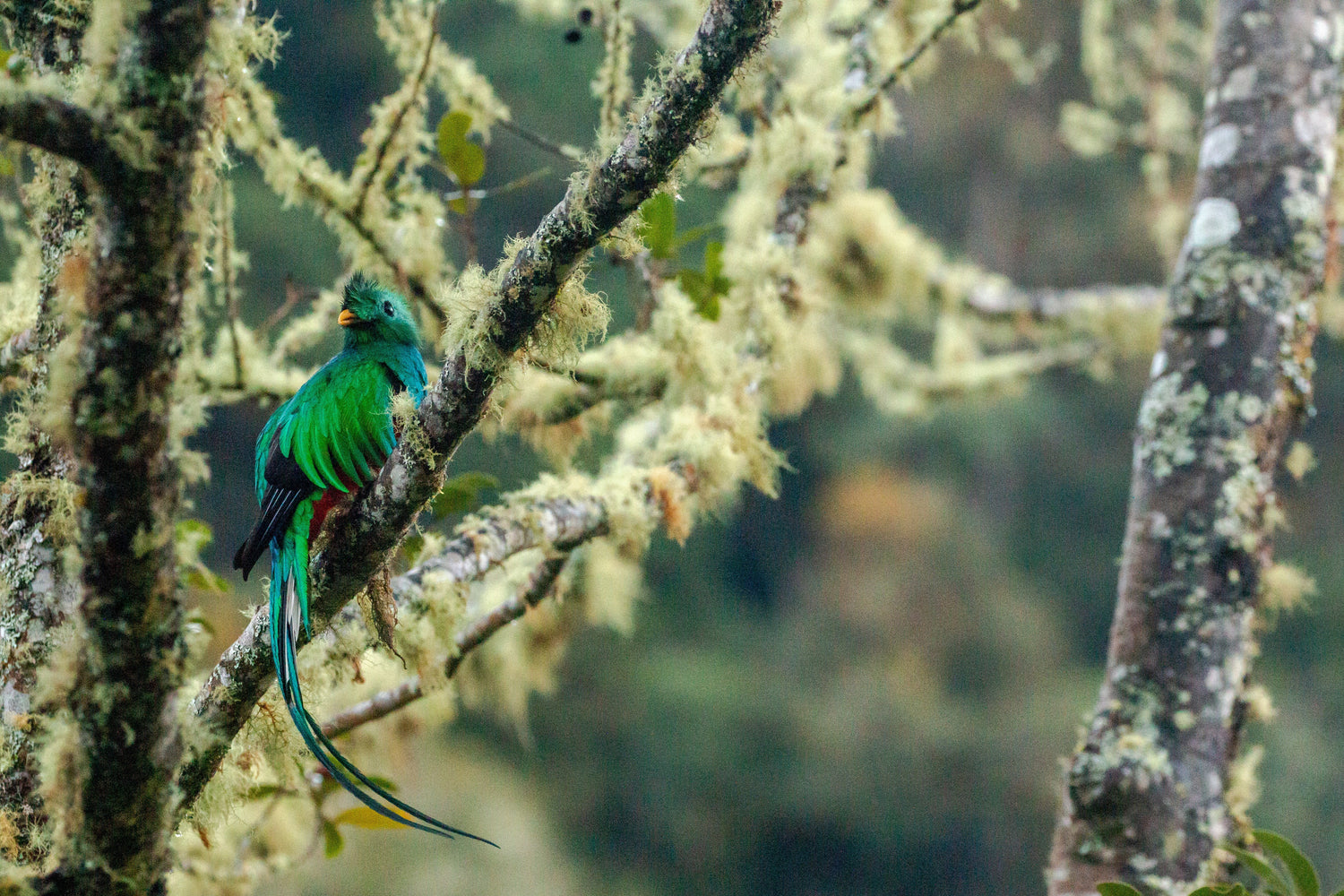
The Resplendent Quetzal in Costa Rica's Cloud Forests
In Monteverde’s misty cloud forest, the resplendent quetzal blends almost perfectly with moss-covered branches and emerald leaves. The male reveals himself through long, flowing streamers that trail behind him, elegant tail coverts that can reach three feet in length, shimmering like living ribbons of emerald and gold.
Success belongs to those who wait patiently near wild avocado trees at first light. From the vantage of a remote cloud forest lodge, you may witness this jewel of the mountains swallow the fruit whole, then later scatter the seeds that will one day help regenerate the canopy.
A private naturalist guide who knows the hidden fruiting trees and seasonal patterns makes all the difference, turning quiet patience into one of the most treasured sightings in Central America.
Expert Insight: Quetzal sightings peak during the breeding season when wild avocado trees are fruiting. Early morning from a well-positioned lodge offers the highest success rate.
 Scarlet Macaws in Flight
A harsh squawk often cuts through the morning air long before the flash of scarlet appears. In Corcovado National Park, these magnificent macaws fly in lifelong pairs, two brilliant streaks of red, blue, and gold moving as one through the dense canopy.
They frequent coastal Beach Almond trees, using their powerful beaks to crack open hard nuts with impressive precision. Their numbers have been steadily recovering thanks to dedicated conservation efforts, making sightings increasingly rewarding.
Remote lodges positioned near the park boundaries offer the best advantage, allowing you to reach prime viewing areas at first light, well before day visitors arrive. From a quiet vantage point with a private naturalist guide, you can watch these vibrant pairs feed, preen, and soar with unhurried grace.

The Flamingo Horizon in the Bahamas
Great Inagua National Park transforms into a vivid sea of pink, home to one of the largest breeding colonies of West Indian flamingos in the world. Thousands upon thousands of these elegant birds gather across the shallow salt pans and hypersaline lakes, their collective color turning the horizon neon.
Their vivid plumage comes from a diet rich in shrimp and other small crustaceans. In the wild, these birds remain wary and easily startled. Approaching too closely can cause the entire flock to lift off in a sudden, thunderous wave of pink.
The most rewarding sightings come with patience and distance. A private guide familiar with the park’s quiet trails and vantage points ensures respectful viewing while helping you read the subtle movements of the colony, from synchronized feeding to occasional courtship displays.
Expert Insight: The best wildlife sightings rarely happen mid-day. Plan your days around early mornings and late afternoons for the most rewarding ethical wildlife encounters, when the light is softer and the birds are more active.
Selecting Ethical Eco-Tours: A 3-Point Checklist for the Conscious Traveler
Choose experiences that protect what they show you. Before booking, ask three questions:
- Does the operator hold official certifications, such as Costa Rica’s CST?
- Do they maintain clear distance rules and avoid baiting?
- Do they employ local guides and staff?
 Your 12-Month Wildlife Calendar: When to Go Where
Time your journey to nature’s rhythm for the best wildlife experiences in Central America:
- January to March: Dry skies and active humpback whales.
- April to July: Whale sharks and the first sea turtle nests.
- August to October: Lush green season, lower prices, and peak bird activity.
The difference between seeing wildlife and truly experiencing it comes down to timing, place, and perspective. When those elements align, the moment stays with you long after you’ve left the jungle, the reef, or the open sea.
Planning a wildlife-focused journey?
We design tailor-made itineraries across Central America and the Caribbean, built around peak wildlife moments, expert guides, and places few travelers reach. Tell us what draws you most and we will shape a journey that feels personal and connected to the natural world.
Last updated April 2026. Wildlife timing can vary year to year based on weather and natural cycles.
