
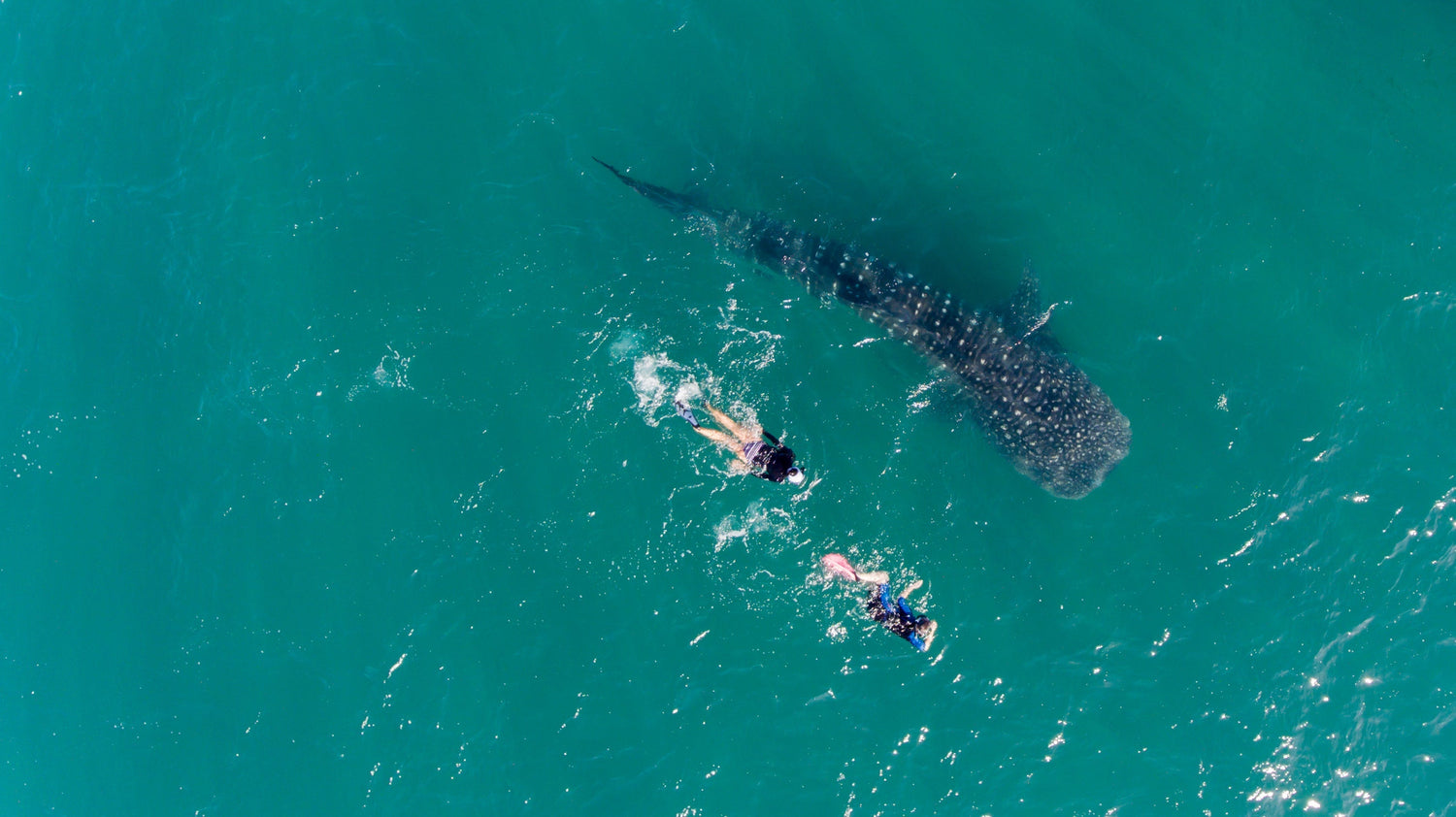
Have you ever dreamed of swimming beside a creature the size of a school bus? Imagine floating in the warm, blue water off the coast of Belize as a shadow slowly materializes from the deep. It’s not a submarine, but a living, breathing giant covered in a pattern of stars. This is the whale shark, and for a few precious weeks each year, you have a rare chance to share the water with them.
The word ‘shark’ itself can be intimidating, but what if the largest shark in the world was also the gentlest? Despite their massive size, these are peaceful giants, and a key insight from marine biologists is that they are completely harmless to people. They are filter-feeders, meaning they swim with their mouths wide open like giant underwater vacuums, scooping up microscopic plankton and fish eggs, not people. Answering the question is it safe to snorkel with whale sharks is simple: absolutely.
This incredible Belize marine life encounter is a privilege, not a theme park attraction. It’s a wild, natural event tied to the full moon, and sightings are never guaranteed. This guide is your blueprint for snorkeling with whale sharks in Belize, covering everything from the secret of when to go to the rules for being a respectful guest in their ocean home.
 The Cosmic Dinner Bell: Why Whale Sharks Follow the Full Moon in Belize
The annual gathering of whale sharks in Belize isn't for tourists; it's for a spectacular natural banquet. Deep within the Gladden Spit Marine Reserve, a unique event unfolds that draws these giants from across the Caribbean. They are following a powerful instinct, not seeking attention, giving us a humbling opportunity to witness them in their element. This powerful drive is the secret behind one of the most incredible wildlife encounters on the planet.
So, what’s on the menu? Each spring, thousands of cubera and dog snapper fish gather in a massive group to spawn, releasing colossal, nutrient-rich clouds of eggs into the water. For the filter-feeding whale sharks, this is the equivalent of an all-you-can-eat buffet. They glide slowly through these clouds with their mouths wide open, feasting on the tiny eggs that are virtually invisible to the human eye. It is this specific, concentrated food source that makes the long journey worthwhile for these massive fish.
This remarkable event doesn't happen by chance. It's timed by the cosmos. The snapper spawning is directly linked to the lunar cycle, occurring for about ten days following the full moon from March to June. This is the secret behind the famous connection between whale sharks and the full moon in Belize. The predictable snapper spawning at Gladden Spit acts as nature’s dinner bell, giving us a clear idea of exactly when the whale shark season in Belize reaches its awe-inspiring peak.
 How to Time Your Trip Perfectly for a Whale Shark Sighting
Knowing nature’s secret schedule allows you to plan your own adventure. While the general season runs from March to June, simply arriving during these months isn’t enough to guarantee a sighting. To truly maximize your chances of an unforgettable encounter, you need to align your visit with the moon, just like the whale sharks do.
The golden rule for timing is this: aim for the window between 3 and 10 days after the full moon. This specific period is the sweet spot when the snapper spawning is most intense, creating the massive cloud of eggs that attracts the whale sharks. Think of it as booking your reservation for the exact same underwater dinner party. Any earlier, and the main event hasn't started; any later, and the sharks may have already moved on.
This narrow window makes planning ahead absolutely critical. Because the best time to swim with whale sharks in Belize is so predictable, tours with licensed operators fill up months, and sometimes even a year, in advance. If you’re wondering when is whale shark season in Belize, use these dates as your guide and book as soon as possible.
-
Prime 2026 Full Moon Dates:
-
April: Full Moon on April 2nd (Best dates: April 5-12)
-
May: Full Moon on May 1st (Best dates: May 4-11)
-
June: Full Moon on May 31st (Best dates: June 2-9)
-
-
Prime 2027 Full Moon Dates:
-
April: Full Moon on April 20th (Best dates: April 23-30)
-
May: Full Moon on May 20th (Best dates: May 23-30)
-
June: Full Moon on June 19th (Best dates: June 22-30)
-
With these dates in your calendar, you’ve solved the "when." But the "where" is just as important. These magical encounters don’t happen just anywhere along the coast; they are concentrated around one very special, protected part of the Belize Barrier Reef.
 What Part of Belize Has Whale Sharks? Your Guide to Gladden Spit
The epicenter of this natural marvel is a specific section of the Belize Barrier Reef called the Gladden Spit and Silk Cayes Marine Reserve. This isn't just a random spot in the ocean; it's a heavily protected area, much like a national park for sea life. All licensed whale shark tours head to this exact location, situated about 22 miles off the coast. The strict regulations here are precisely what keep the ecosystem healthy, ensuring the snapper, and therefore the whale sharks, return year after year.
To reach the reserve, you’ll need a home base on the mainland, and the most popular choice is the charming village of Placencia. This laid-back peninsula offers the shortest boat ride to Gladden Spit and is home to the majority of certified whale shark tour operators. Its vibrant atmosphere, with sandy streets, colorful guesthouses, and beachfront restaurants, makes it an ideal and convenient spot to launch your adventure. Booking one of the Gladden Spit Marine Reserve tours is straightforward from here.
Another excellent option, particularly if you're seeking a quieter, more culturally rich experience, is the coastal village of Hopkins. Known for its strong Garifuna culture, Hopkins provides a deeply authentic and relaxed vibe. While the boat ride to Gladden Spit is slightly longer from here, several reputable operators also run tours from the village. No matter which village you choose, the most important decision you'll make is selecting a safe and responsible guide to lead your expedition.
Aside from being convenient launch points, Placencia and Hopkins are also home to some of Belize's best beach resorts and luxury stays. From boutique eco-lodges with direct beach access in Placencia to intimate, culturally immersive properties in Hopkins, you can unwind after a day on the water in comfort. Many Belize luxury resorts offer seamless add-ons like private transfers to tour departures, making it easy to combine your whale shark adventure with relaxation on pristine sands or in overwater villas.
 How to Choose a Safe and Ethical Belize Whale Shark Tour
With tour shops lining the streets of Placencia and Hopkins, picking the right guide can feel overwhelming. However, there’s a simple secret to ensure your safety and protect the sharks: only a handful of operators hold the special, government-issued license required to conduct whale shark tours in the Gladden Spit Marine Reserve. This license isn't just a piece of paper; it's your guarantee that the captain and guides are highly trained in safety, conservation, and finding the animals ethically.
Before booking, you should feel confident asking a few direct questions. Don’t hesitate to ask to see their whale shark license or inquire about the maximum group size they allow per guide. A professional operator will gladly answer, as they pride themselves on their credentials and commitment to small, manageable groups. This practice is not only safer but also provides a more personal and respectful encounter with the sharks, far from a crowded free-for-all.
Cost is a practical factor. A legitimate, all-inclusive day trip will typically cost between $180 and $250 USD per person. This fee covers your boat transport, experienced guide, snorkel gear, lunch, and the mandatory marine park entrance fee, which directly funds conservation. Be wary of any operator offering a significantly cheaper tour, as it’s a major red flag they may be operating illegally without a license or cutting dangerous corners on safety.
Your choice of guide is the single most important decision for a successful trip. By selecting a licensed operator, you ensure your adventure is both safe and sustainable, contributing to a tourism model that helps these gentle giants thrive. Your guide is your partner in this shared responsibility, and their first job is to prepare you for the encounter by explaining the crucial rules you must follow once you’re in the water.
 Your Guide to Ethical Tourism: The 4 Rules You Must Follow in the Water
Once you slide from the boat into the vast blue of the Caribbean, the excitement is palpable. This moment is the reason you came. But remember, you are a visitor in a wild and fragile environment. To ensure the whale sharks remain safe and undisturbed, Belize enforces a clear set of rules for every snorkeler and diver.
Your licensed guide will be your conductor in this underwater orchestra, but the responsibility to act ethically is yours. The core principles are simple and designed to give the sharks the space they deserve.
-
Keep Your Distance: You must stay at least 10 feet (3 meters) away from the whale shark at all times. This gives these massive fish a clear, stress-free path to swim and feed.
-
Absolutely No Touching: It’s tempting, but touching a whale shark is strictly forbidden. Their skin is coated in a protective mucus layer that acts like a shield against infection. Human touch can strip this away, making them vulnerable to disease.
-
No Flash Photography: The sudden burst of a camera flash can startle, disorient, or even harm a whale shark's sensitive eyes. Keep your camera flash off.
-
Always Follow Your Guide: Your guide is trained to read the shark’s behavior and manage the group for everyone’s safety. Listen to their instructions immediately and without question.
These guidelines are the heart of Belize’s successful conservation model. By honoring them, you actively participate in protecting these magnificent creatures, ensuring they continue to visit Gladden Spit for years to come. Some recommended operators are:
-
Seahorse Dive Shop (Placencia)
-
Splash Dive Center (Placencia)
-
Avadon Divers (Placencia)
-
Island Divers Belize (Placencia)
-
Hamanasi Adventure & Dive Center (Hopkins/Sittee River area)
Permitting can change from year to year. Before booking with any specific tour operator, always confirm the operator is currently licensed for whale shark encounters at Gladden Spit and follows Belize Fisheries/park rules.
 Snorkeling vs. Diving with Whale Sharks: What's the Better Experience?
One of the biggest questions for visitors planning Gladden Spit Marine Reserve tours is whether to snorkel or SCUBA dive. While both are options, the answer might surprise you. Because the whale sharks are drawn to the surface to feed on snapper eggs, snorkelers often get a better, more consistent view of the action. Floating on the surface puts you right at eye-level with these gentle giants, giving you a front-row seat as they glide by.
Since the whale sharks are there for the "buffet" of eggs floating near the top, snorkelers frequently enjoy longer encounters. You can easily follow their slow, deliberate path without worrying about depth or air consumption. The experience is incredibly serene and breathtakingly safe.
For certified divers, the experience offers a different, more humbling perspective. From about 30 feet below, you get to witness the sheer scale of the whale shark as its entire, bus-sized silhouette passes above you, blocking out the sun. It's a powerful sight, but your position deep in the water column often means the encounter is more fleeting as the shark stays focused on the food source at the surface.
The choice between snorkeling or diving with whale sharks in Belize depends on the experience you seek. However, it’s vital to remember that these are wild animals in their natural habitat. A sighting is a remarkable gift, not a guarantee. Weather, the timing of the spawn, and pure luck all play a role, making any glimpse of these magnificent fish a true privilege.
 Are You Ready to Plan Your Belize Adventure?
Swimming with a whale shark doesn't have to remain just a dream. The secret to planning a successful Belize trip boils down to a few key choices: timing your visit with the full moon in April or May, staying near Placencia or Hopkins, and choosing a licensed guide committed to a safe, respectful encounter.
Many travelers turn this into a full package trip to Belize, blending whale shark snorkeling with nearby Belize beach resorts, reef dives, or cultural experiences in Garifuna villages. This journey is about more than just ticking an item off a bucket list. It's a meaningful contribution to marine conservation.
Reach out to us today if you'd like help crafting your tailor-made Belize trip, complete with ethical tours, seamless logistics, and the perfect place to rest after your ocean adventure.
