
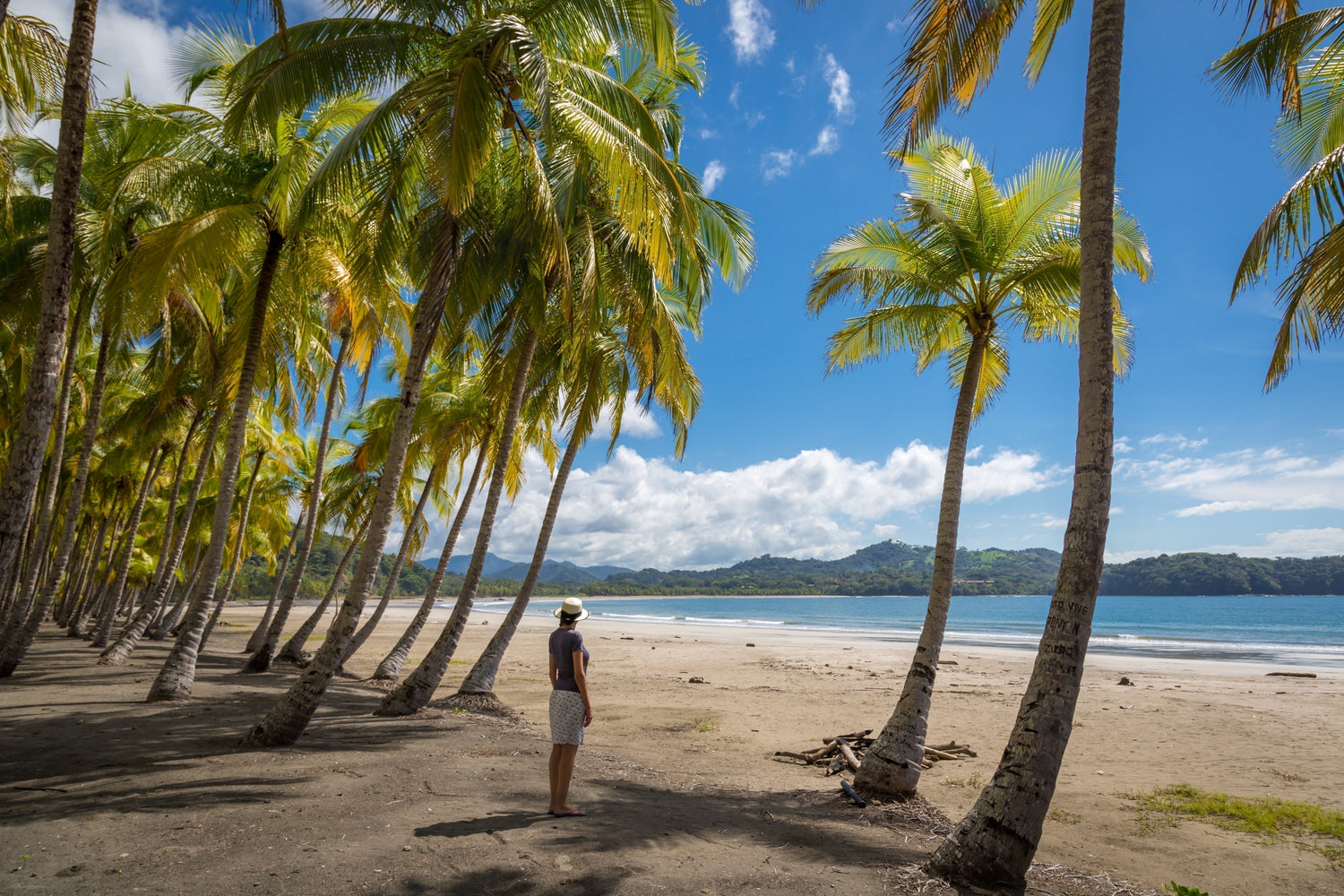
The best time to visit Costa Rica is usually December through April, when the Pacific coast is dry and the park trails aren't gloomy and muddy. But September and October, the two months most guides tell you to skip, are often the clearest weeks of the year on the Caribbean side. Guanacaste and Puerto Viejo have opposite rainy seasons, and they're six hours apart by road. And don't sleep on shoulder season. May, June and November are a great time to go when the jungle is lush, and you get the very best value for your dollar while avoiding holiday crowds. Shoulder season is our favorite time to recommend to honeymooners.
Whether you're planning a honeymoon, a trip with kids, or a tailor-made Costa Rica itinerary, the month you pick should inform your route. Turtle nesting, whale migration, and which coast is dry all move through the year. We build around whichever one you care about most. We'd rather you pick the month that gives you the chance to see the thing you want to see, than around a school holiday. But we'll work with either.
Costa Rica is a year-round destination. It isn't within the main hurricane belt, so hurricane risk is low compared to most Caribbean islands and coasts further north like Belize and the Riviera Maya. Storm impacts are possible in Costa Rica, but direct hits are rare.

It is also a place where many signature experiences run rain or shine. Hot springs, wildlife walks, hanging bridges, cacao and coffee experiences, rafting (season dependent), waterfalls, and jungle lodges are all incredible in the green season. And because Costa Rica is packed with microclimates, you can often “swap coasts” to find better conditions. The biggest example: September and October are famously excellent months for the Caribbean side, even while the Pacific is at its rainiest.
This guide breaks Costa Rica down month by month with simple weather patterns, best-fit travel styles, and the wildlife highlights that can shape an entire itinerary, including turtle nesting on both coasts, arribadas in Ostional, and whale migration season on the Pacific.
Costa Rica at a Glance: Dry Season, Green Season, and Microclimates
Pacific Dry Season (roughly December to April): More sun, less rain, and peak travel demand in Guanacaste, Manuel Antonio, and the Nicoya Peninsula.
Pacific Green Season (roughly May to November): Lush landscapes, fewer crowds, better value, and a rhythm of sunny mornings with afternoon showers in many regions.
Caribbean Coast (Limón, Puerto Viejo, Tortuguero): Different rules. Rainfall is spread differently through the year, and September and October often shine on the Caribbean side, So if September or October is your only window, go Caribbean. We plan a lot of trips to Caribbean Costa Rica, and they're some of our favorites.
Hurricane note: Costa Rica sits far enough south that major hurricane risk is very low compared to much of the Caribbean, but tropical systems in the wider region can still bring heavy rain.

Costa Rica Weather by Month: Quick Reference Table
| Month | Typical Pattern | Best For | Wildlife Highlights | Vibe Check |
|---|---|---|---|---|
| January | Dry season on the Pacific, crisp nights in the highlands | First-timers, families, beach + volcano combos | Prime humpback whale window (Northern Hemisphere) begins on the Pacific | Bright, easy, classic Costa Rica |
| February | One of the driest, clearest months on the Pacific | Honeymoons, surfers, national park hopping | Humpbacks continue on the Pacific; quetzal season ramps up in cloud forest | Golden light, high demand |
| March | Hotter and drier on the Pacific, great visibility | Beach lovers, photographers | Late peak for Northern Hemisphere humpbacks; quetzal nesting season strong | Sun-soaked, energetic |
| April | Transition month, still mostly dry on the Pacific | Still high season, but generally fewer crowds | Quetzals still strong; early turtle activity starts to build (by region) | Warm days, flexible routing |
| May | Green season begins in many Pacific regions, afternoons get wetter | Lush scenery, better rates, waterfall chasers | Caribbean turtle season builds toward peak months | Fresh, green, quieter |
| June | Green season settles in, mornings often still active-friendly | Rainforest lovers, photographers, softer pricing | Green turtle nesting season begins in Tortuguero (major window) | Jungle at its best |
| July | Often includes a short mid-summer break on parts of the Pacific | Families, mixed coast itineraries | Start of peak green turtle season in Tortuguero; humpbacks (Southern Hemisphere) begin arriving later in the month | Lively, lush, surprising sun breaks |
| August | Green season on the Pacific, Caribbean often feels steady | Wildlife-first travel, fewer crowds | Ostional arribadas often peak; Southern Hemisphere humpbacks are strong on the Pacific; Tortuguero is in full turtle season | Big nature month |
| September | Wettest stretch on much of the Pacific, Caribbean often shines | Caribbean coast, quieter travel, value | Excellent whale watching continues on the Pacific; Tortuguero turtle season remains strong | Microclimate magic month |
| October | Pacific is still very wet, Caribbean is often one of the best bets | Caribbean coast stays, culture + beach | Leatherback nesting season begins on the Pacific (Las Baulas area); whales can still be present on the Pacific | Swap coasts, win the weather |
| November | Transition month, rains ease and the Pacific starts to brighten | Shoulder season sweet spot | Late Southern Hemisphere humpbacks; Pacific leatherback season continues | Fresh air, greener landscapes |
| December | Dry season returns to the Pacific, holiday travel begins | Festive escapes, families, classic routes | Northern humpback season returns; Pacific leatherback nesting continues | Bright, celebratory |
Data notes: Costa Rica’s weather varies sharply by region. Pacific patterns follow a clearer dry/green season cycle, while the Caribbean side often has its best window in September and October.

Costa Rica Microclimates: How We Plan Around Them
- North Pacific (Guanacaste, Papagayo): Drier overall, classic beach weather in dry season.
- Central Highlands (Arenal, Monteverde, San Gerardo de Dota): Cooler evenings, cloud forest conditions, and great year-round nature.
- Central and South Pacific (Manuel Antonio, Uvita, Osa Peninsula): Lusher and wetter, with huge wildlife payoffs in green season.
- Caribbean Coast (Tortuguero, Cahuita, Puerto Viejo): Often shines in September and October, making it a smart seasonal counterbalance.
Osaviva planning rule: If you want to travel in September or October, we often build an itinerary that leans Caribbean-first, then adds a short Pacific or highlands component where conditions still work well for key experiences.

Wildlife Seasons That Can Define Your Trip
Turtle nesting on the Caribbean (Tortuguero): Green turtle nesting runs roughly June through November, with high activity in the heart of that window.
Turtle arribadas (Ostional, Pacific): Olive ridley arribadas happen year-round, but the biggest, most frequent mass nestings are commonly reported from August through December.
Leatherback nesting on the Pacific (Las Baulas, Playa Grande): Typically runs from around October into February.
Humpback whale migration (Pacific coast): Costa Rica has two humpback seasons, Northern Hemisphere whales roughly December to March and Southern Hemisphere whales roughly July to mid-November, with peak months often January to February and August to September.
Quetzals in the cloud forest: The easiest window is commonly tied to nesting and food supply, often February through May (with broader sightings possible by location).
Month-by-Month Breakdown
January: Dry-Season Ease, Whale Season Begins
January is one of the simplest months to travel, especially on the Pacific. Think beach days in Guanacaste, volcano mornings in Arenal, and cooler highland evenings. It is also a strong month for humpback whales along the Pacific coast. More about January weather in Costa Rica.
Osaviva tip: For families, January is ideal for a classic Arenal plus beach pairing, with wildlife walks that run comfortably in the cooler mornings.
February: Peak Dry Season, Romance and Clear Skies
February is a top pick for honeymoons and first trips, with reliably sunny Pacific weather and excellent conditions for national parks. Whale watching remains strong on the Pacific, and quetzal season is building in the cloud forest. More about February weather in Costa Rica.
March: Hotter, Drier, and Great for Big-Itinerary Travel
March is made for multi-stop routing, from Guanacaste beaches to Monteverde hanging bridges to Arenal hot springs. It is also still within the Northern Hemisphere humpback window. More about March weather in Costa Rica.
April: Pre-Shoulder Season Shine
April often feels like the last bright stretch before the green season fully arrives. It is a great month for fewer crowds and strong weather across the Pacific and highlands. Quetzals can still be a highlight in the cloud forest. More about April weather in Costa Rica.

May: Hello Green Season, Hello Waterfalls
May brings the first steady rains in many Pacific regions, but most adventures still run smoothly. This is when Costa Rica turns vivid. Rivers rise, waterfalls swell, and the rainforest feels alive. More about May weather in Costa Rica.
June: Tortuguero Season Begins
June is a strong start for turtle lovers. Tortuguero’s green turtle nesting season begins, and the Caribbean side becomes a smart add-on for wildlife-focused itineraries. More about June weather in Costa Rica.
Rain or shine note: Hanging bridges, wildlife walks, cacao experiences, and hot springs are still excellent. You just pack differently and plan earlier starts.
July: A Mid-Summer Sweet Spot, Plus Wildlife Momentum
July often brings a short mid-summer break on parts of the Pacific, which can make it feel easier than you expect. Turtle season is fully underway in Tortuguero, and the earliest edge of the Southern Hemisphere humpback season begins later in the month. More about July weather in Costa Rica.
August: Peak Wildlife Energy
August is a top month if your priority is nature. Tortuguero is in full turtle season, Ostional arribadas often intensify, and humpback whale watching becomes a major draw on the Pacific, especially later in the month. More about August weather in Costa Rica.
September: Caribbean Coast Spotlight
September is one of the best examples of Costa Rica’s microclimates at work. The Pacific is deep in green season, but September and October can be excellent on the Caribbean coast, which is why we love building coast-to-coast itineraries for this window. More about September weather in Costa Rica.
Whales can still be excellent on the Pacific, and Tortuguero remains in its prime turtle window.

October: Caribbean Wins Again, Leatherbacks Begin on the Pacific
October continues the Caribbean advantage, and it is also when Pacific leatherback nesting season begins in the Las Baulas area. If you want a wildlife-led itinerary, October can be surprisingly rewarding with the right routing. More about October weather in Costa Rica.
November: Transition Month, Softer Crowds
November is when many travelers feel the shift. The Pacific starts drying out, landscapes stay green, and crowds are often lighter than in December. Southern Hemisphere whales can linger into this period, and leatherback nesting continues. More about November weather in Costa Rica.
December: Dry Season Returns, Holiday Energy Arrives
December brings back the classic Pacific dry season rhythm and the start of the Northern Hemisphere humpback window. It is a perfect month for a high-impact itinerary if you book early. More about December weather in Costa Rica.
Best Time to Visit Costa Rica by Travel Style
- Couples and Honeymoons: February to April for classic dry-season romance, or September and October on the Caribbean for a quieter, beachy escape with microclimate advantage.
- Families: December to March for easy logistics and beach days, or July for a great balance of value and adventure.
- Wildlife First: June to October for turtles (with specific hotspots), and August to September for peak humpback whale watching on the Pacific.
- Best Value Luxury: May, June, September, October, and November, with itinerary design that works with the microclimates.
What to Pack (No Matter When)
- Lightweight, breathable clothing
- A rain jacket or poncho (even in dry season, especially in cloud forest)
- Comfortable shoes with grip for rainforest trails
- Swimsuits for beaches, hot springs, and waterfall dips
- Reef-safe sunscreen, sunglasses, and a hat
- Bug spray for jungle regions
- A dry bag for boat days and rainy-season adventures
 Ready to Make It Real?
Pick a month that gives you the one thing you'd hate to miss. Quiet Caribbean mornings in September. Quetzals in the cloud forest in spring. Turtle nights in Tortuguero. Whale sightings off the Pacific coast.
Drop us a note at Osaviva and tell us your must-see wildlife moment, your ideal pace, and your dream mix of coast, jungle, and volcano. We will build a season-matched itinerary that makes the most of Costa Rica’s microclimates and year-round adventure.
Last updated February 2026. Weather and wildlife are guided by long-term patterns, but nature always gets the final say.
Frequently Asked Questions
What is the best month to visit Costa Rica?
December through April, if you want the surest bet. The Pacific is dry, and parks are easy to get around. But that's also when everyone else goes (so lots of people, lots of traffic, low vacancy rates, big crowds at attractions), and when you'll pay the most for it. May and late November get you most of the same weather for a lot less money, which is why we recommend them so often.
What is the rainiest month in Costa Rica?
September and October on the Pacific side, and it can be a deluge, particularly in the south. The north tends to be drier. But the Caribbean runs the opposite pattern, so those same two months have awesome, sunny weather when the rest of the country is beneath cloud cover. We build a lot of September and October trips Caribbean-first for exactly that reason.
Is the green season worth it?
Yes, and it's our favorite time to send honeymooners. Rates drop, the crowds thin out, and the jungle is at its most alive. Hot springs, zip lines, hanging bridges, wildlife walks, cacao and coffee experiences and waterfalls all go rain-or-shine. Plus, mornings are usually clear. The best months to go in green season are what we call shoulder season: May, June and November.
When can you see whales in Costa Rica?
Twice a year. Northern Hemisphere humpbacks come through roughly December to March, and Southern Hemisphere humpbacks from about July to mid-November. January to February and August to September are usually the peaks.
When is turtle nesting season in Costa Rica?
Different times and different turtles on each coast. Green turtles nest at Tortuguero roughly June through November. Olive ridley arribadas happen at Ostional year-round, but the big mass nestings usually land between August and December. And Pacific leatherbacks nest at Las Baulas from around October into February.
Last updated August 2, 2026.
