
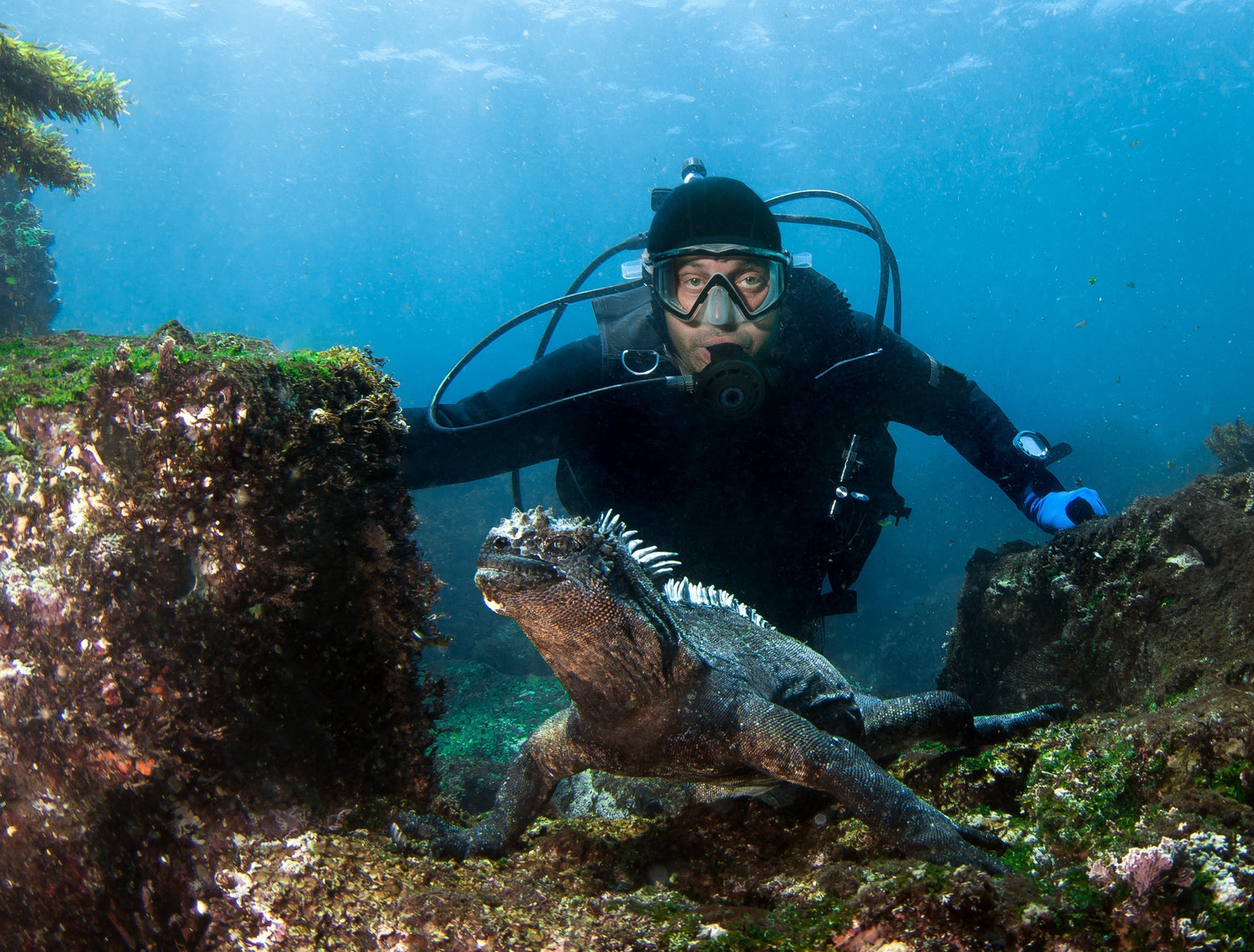
The Galápagos Islands deliver some of the most direct and reliable marine wildlife encounters on Earth. Sea lions approach within arm's reach, marine iguanas dive past at close range, Galápagos penguins hunt in tight bursts, and green sea turtles rest calmly in shallow coves. These interactions occur regularly in water often shallower than 10 meters and are accessible to both snorkelers and divers.
Many visitors assume advanced diving skills are required. In practice, the islands suit a wide range of comfort levels and experience, from surface snorkeling in protected bays to deep drift dives along volcanic walls. Success depends on matching the format (snorkeling, land-based day trips, or liveaboard) to your fitness, certification, and wildlife priorities.
This guide is for travelers deciding:
- Whether snorkeling captures enough of the marine life or scuba is necessary
- Whether a liveaboard justifies the time and cost for remote northern sites
- Which season best aligns with specific species (whale sharks, mantas, hammerheads) versus comfort and visibility
- Which base island and sites suit your experience level and group dynamics
You will find clear comparisons, season-by-season species patterns, 2026 cost estimates, preparation requirements, top authorized operators, and conservation rules that protect this ecosystem.
 Quick Takeaways
- Snorkeling delivers most wildlife encounters with less effort
- Liveaboards are best for advanced divers chasing whale sharks
- December–May = calmer, warmer, easier conditions
- June–November = peak big marine life, rougher seas
- Santa Cruz = best base for flexibility
Is the Galápagos Worth It for Snorkeling Alone?
Yes. For most travelers, snorkeling alone delivers 80–90% of the iconic Galápagos marine wildlife encounters without the added time, cost, certification, or physical demands of scuba diving.
What snorkeling gives you (routinely and reliably)
- Playful sea lions initiating close contact and circling within inches
- Marine iguanas diving and feeding 1–5 m below the surface
- Galápagos penguins hunting in rapid bursts and pausing to inspect you
- Green sea turtles gliding past at eye level or resting calmly
- Eagle and golden rays soaring overhead, often in small schools
- Resting whitetip reef sharks and occasional small groups of hammerheads
- All of this in shallow, protected sites (typically 2–15 m deep) with good visibility and mild currents

These encounters occur year-round on day-boat trips or shore access. They require only basic swimming comfort and pair well with land excursions (hiking, beaches, wildlife viewing). Sessions last 1–2 hours, wetsuits are provided, and guides stay close. This format is ideal for families, mixed groups, beginners, or anyone prioritizing flexibility and recovery.
What you miss (and whether it matters)
- Large-scale scalloped hammerhead schools (hundreds of individuals)
- Seasonal whale shark passages (peak July–October, mostly northern islands)
- Deeper pelagic species (silky sharks, sunfish, massive bait balls)
These are concentrated at remote northern sites (Darwin, Wolf) accessible only by liveaboard. They require Advanced Open Water certification, 50+ logged dives, drift-current experience, tolerance for cooler water (16–22 °C), stronger currents, and 7–10+ night commitments. They represent the remaining 10–20% of the experience. Central-island sites (Kicker Rock, Gordon Rocks, Punta Vicente Roca) already deliver reliable hammerhead schools, mantas, and turtles in more accessible conditions.

At a glance
| Aspect | Snorkeling Only (Land-Based) | Full Scuba (Liveaboard Focus) |
|---|---|---|
| Wildlife Coverage | 80–90% (sea lions, penguins, iguanas, turtles, rays, some sharks) | 100% (adds large hammerhead schools and whale sharks) |
| Cost (2026 est., excl. flights) | $2,000–$5,000 (7–12 days) | $6,000–$16,000+ (7–10+ nights) |
| Duration Needed | 7–12 days (flexible) | 8–14 days (fixed itinerary) |
| Physical / Skill Demand | Low (basic swimming) | High (currents, cold water, advanced cert) |
| Flexibility | High (mix with land activities, adjust daily) | Low (structured around dives) |
| Best For | Families, first-timers, mixed groups, comfort-focused | Dedicated pelagic hunters, repeat visitors |
Bottom line
If your goals are close wildlife interactions, memorable photos, and a balanced island experience, snorkeling is not just sufficient. It is frequently the more enjoyable and practical choice. Diving adds real value only if hammerhead walls or whale sharks are non-negotiable priorities.
Osaviva insight: We routinely design trips for clients who arrive wanting “everything” and leave saying snorkeling gave them more consistent magic and far less fatigue than expected. A thoughtfully structured land-based snorkel program often outperforms a high-intensity liveaboard for overall satisfaction and value.
 Snorkeling vs. Scuba: Selecting Your Underwater Path
The defining marine experiences in the Galápagos occur beneath the surface and do not require expert certification to access. The choice between snorkeling and scuba depends primarily on the species you wish to observe and your comfort in open water.
Snorkeling offers the lowest barrier to entry: basic swimming ability is sufficient. In calm, shallow bays you regularly encounter sea lions, Galápagos penguins, and green sea turtles at close range. Most outings are part of day trips that combine water time with land excursions, making them suitable for families, beginners, and those preferring a relaxed schedule.
Scuba diving, for certified divers, provides access to deeper habitats and larger pelagics. You descend volcanic walls to observe schools of hammerhead sharks, eagle rays, and seasonal whale sharks. Most sites feature moderate to strong currents and water temperatures of 16–28 °C, so operators typically require experience beyond basic Open Water certification. This often means Advanced Open Water plus logged dives in currents.
| Factor | Snorkeling | Scuba Diving |
|---|---|---|
| What You'll See | Sea lions, turtles, penguins, rays, colorful reef fish | All of the above, plus hammerhead sharks, vast fish schools, eels, and seasonal giants like whale sharks |
| Skill Level Needed | Basic swimming ability | Scuba certification (Advanced Open Water recommended) + logged dives |
| A Typical Day | Shorter outings from boat or beach, often combined with land activities | Focused half- or full-day dives, multiple immersions per day |
Osaviva insight: Most travelers overestimate how much diving they need. For many of our clients, a land-based itinerary with 3–4 well-chosen dive days delivers nearly the same wildlife encounters with far more flexibility, rest, and island exploration while avoiding the intensity of full-time diving.
 Meet the Locals: Iconic Marine Encounters
The Galápagos marine environment stands apart because animals exhibit no natural fear of humans and routinely approach on their own initiative. Most meaningful interactions occur in depths of 2–15 meters.
Playful Sea Lions, The Welcoming Committee
Why It Matters
Sea lions treat divers and snorkelers as playmates, producing some of the most consistent and engaging interactions in the islands.
Where You'll See Them
Shallow, sunlit bays around San Cristóbal, Española, and Santa Fe. They approach in spirals, blow bubbles at your mask, nibble fins, and circle within inches.
Best Time & Tips
Year-round; most active in mornings during hunting periods. They initiate contact far more than you do. Remain neutral and allow them to dictate the pace.
Marine Iguanas, Prehistoric Divers in Action
Why It Matters
As the only ocean-going lizards, marine iguanas demonstrate remarkable adaptation by diving to feed on algae, often directly in view of snorkelers.
Where You'll See Them
1–5 meters deep at Isabela and Fernandina sites such as Punta Espinosa and Las Tintoreras. Watch for dark, spiky silhouettes descending from lava rocks, grazing, then surfacing to expel salt.
Best Time & Tips
Year-round; cooler months (June–November) show more frequent feeding dives. Position yourself above the feeding zone and remain still.
Green Sea Turtles, Graceful Giants
Why It Matters
Their deliberate movements and calm demeanor add a steady, almost meditative rhythm to sessions.
Where You'll See Them
Protected coves and reef edges. Snorkelers often meet them at the surface; divers observe them resting over sand or drifting along walls.
Best Time & Tips
Year-round; highest densities at Tagus Cove, Los Túneles, Concha de Perla. Approach slowly and avoid chasing. Turtles tolerate proximity when undisturbed.
Galápagos Penguins, Speed Demons of the Tropics
Why It Matters
These equatorial penguins hunt with rapid, precise bursts, displaying an active underwater behavior rarely seen elsewhere.
Where You'll See Them
They pass in tight, acrobatic turns pursuing fish, occasionally pausing to inspect before accelerating away.
Best Time & Tips
Year-round; most active in cooler months (June–November) at Isabela (Túneles, Punta Vicente Roca) and Bartolomé. Morning and late-afternoon sessions align with peak hunting.

Rays on the Wing, Eagle Rays and Golden Rays
Why It Matters
Their slow, wing-like undulations overhead provide scale and elegance, complemented by resting whitetip reef sharks on the bottom.
Where You'll See Them
Schools glide in formation, casting shadows; whitetips rest in hollows or under ledges.
Best Time & Tips
Year-round; warmer months (December–May) increase sightings at Kicker Rock and Punta Vicente Roca. Scan upward frequently.
The Hammerhead Spectacle, A Bucket-List Thrill
Why It Matters
Aggregations of scalloped hammerheads form one of the ocean's most striking and consistent large-predator displays.
Where You'll See Them
Current-swept northern sites (Darwin, Wolf, liveaboard access only), with dozens to hundreds cruising in loose schools.
Best Time & Tips
Year-round reliable; largest schools July–October. Drift passively with the current to maximize observation time.
Whale Sharks, Gentle Giants on Migration
Why It Matters
Encounters with the planet's largest fish are peaceful yet imposing, often occurring at mid-water depths.
Where You'll See Them
They pass with wide mouths filtering plankton, primarily around Darwin and Wolf.
Best Time & Tips
June–November, peak July–October (mature females predominant). Position yourself in open blue water at 5–15 meters.
These encounters are routine in the Galápagos. Wildlife consistently reduces the distance on its own terms.
 Liveaboard vs. Land-Based: Choosing Your Base
Your primary decision involves selecting between a liveaboard vessel, which functions as a mobile dive resort, and a land-based itinerary centered on hotels in inhabited areas. Each approach delivers a distinct experience.
Liveaboards offer dedicated, all-inclusive voyages tailored for committed divers and, in some cases, snorkelers. These itineraries reach the most isolated northern islands, including Darwin and Wolf, which remain out of reach for standard day trips. Meals, accommodations, and dives occur entirely on board, with three to four immersions scheduled daily for maximum immersion in remote marine ecosystems. Most liveaboard trips run a minimum of 7 nights (often structured as 8 days/7 nights to account for travel days), with many operators offering extended options of 10 nights or longer. Shorter durations are rare and impractical due to the long transit times required to reach premium northern sites. A 7-night core itinerary typically delivers 18–22 dives, while a 10-night version can push that to 26–32 dives, adding extra time at Darwin/Wolf and central hotspots. This length ensures you maximize pelagic encounters without excessive fatigue from constant travel, though it demands a firm commitment of time and budget.

Land-based options provide greater flexibility and opportunities to engage with island communities. You base yourself in places such as Puerto Ayora on Santa Cruz or Puerto Baquerizo Moreno on San Cristóbal, then join daily boat trips for snorkeling or diving. This setup lets you adjust your rhythm, incorporate terrestrial tours, and spend evenings sampling local cuisine or strolling through towns. For a meaningful diving-focused experience, plan for at least 7–10 days total on the islands (often 8–12 days including arrival/departure buffers), allowing 4–7 full days of diving interspersed with land excursions, rest, or island-hopping via ferries. Shorter stays of 5–6 days work for lighter snorkeling or a couple of dive days, but extending to 10+ days lets you cover multiple inhabited islands (Santa Cruz, San Cristóbal, Isabela) and hit strong central sites repeatedly without the intensity of a liveaboard schedule.
Here is a side-by-side overview:
| Factor | Liveaboard Vessel | Land-Based Hotel |
|---|---|---|
| Best For | Dedicated divers seeking remote, world-class sites | Snorkelers, families, occasional divers, and budget-conscious travelers |
| Dive/Snorkel Sites | Exclusive access to Darwin & Wolf plus additional premier locations | Reliable day trips to strong central-island sites like Kicker Rock and Gordon Rocks |
| Cost | Higher initial investment, largely all-inclusive | Greater control over expenses; potentially more affordable overall |
| Pace | Structured around intensive water activities | Adaptable schedule with time for relaxation, culture, and varied excursions |
| Recommended Duration | 7–10+ nights (minimum 7 nights for northern access; 8–11 days total) | 7–12+ days on islands (4–7+ dive days; extend for multi-island exploration) |
Osaviva insight: Liveaboards shine for dedicated big-animal chasers, but we often recommend them only for clients with 7–10+ days available and high pelagic priority. For 70% of our travelers (especially mixed groups or first-timers), a well-paced land-based trip hits 85–90% of the highlights with better recovery, local culture, and no long open-ocean crossings.
Whichever path you choose, factor in travel logistics to the Galápagos (flights from mainland Ecuador often add 1–2 buffer days at each end) and your overall goals. Intensive big-animal diving favors a longer liveaboard, while a balanced mix of underwater adventures and island life suits an extended land-based stay.
 Decision Framework: Choosing Your Galápagos Adventure
Match your priorities to the right format:
- Choose snorkeling if you want iconic wildlife encounters (sea lions, turtles, penguins), lower cost, no certification needed, and maximum flexibility. Perfect for families, couples with mixed interests, or first-timers.
- Choose land-based diving if you want strong central sites (Kicker Rock, Gordon Rocks), island culture, relaxed pace, and options to mix diving with hikes, beaches, or rest days. Ideal for mixed groups, shorter trips, or moderate budgets.
- Choose liveaboard diving if hammerhead schools, whale sharks, and remote northern action are your top goals. Commit to the intensity for unmatched pelagic thrills.
- Choose warm/wet season (Dec–May) for calmer seas, warmer water (mid-70s°F+), clearer visibility, and comfortable snorkeling/manta focus.
- Choose cool/dry season (June–Nov) for nutrient-driven explosions of life, peak whale shark/hammerhead densities, despite cooler water and potential chop.
Weigh your experience, fitness, seasickness tolerance, and must-see species, then book with that in mind for the trip of a lifetime.
We design Galápagos trips around your comfort level, wildlife priorities, and pace.
Start planning your journey
 Snorkeling in the Galápagos: Your Gateway to Magic
Snorkeling in the Galápagos stands on its own as one of the planet's most extraordinary water experiences. No certification is required, only the ability to swim comfortably and a sense of wonder. The islands' nutrient-rich waters and fearless wildlife create encounters that feel personal: sea lions tumbling around you, marine iguanas grazing inches below, penguins streaking past in silver blurs, and turtles drifting serenely. Visibility often exceeds 20–30 meters in calm conditions, revealing volcanic seascapes teeming with color and life.
Snorkeling sites vary by island and access method. Some are from shore (rare and special), most via day-boat panga with easy ladder or beach entries, and select spots on multi-day cruises for remote access. Difficulty factors include occasional mild surge or currents (rarely strong for snorkel sites), cold water (16–28°C depending on season; a 3–5mm wetsuit helps), depth perception in clear water, and confidence in open ocean. Most tours provide flotation vests, wetsuits, and guides who stay close.
Top Snorkeling Sites by Island and Wildlife Highlights
San Cristóbal
- Kicker Rock (León Dormido) – Day-boat; sea lions, turtles, rays, whitetip reef sharks, colorful fish; moderate surge possible but calm channel suits beginners.
- Playa Mann or Puerto Chino – Shore or short boat; playful sea lions in shallow, protected bays, ideal for families and first-timers.
Santa Cruz / Nearby
- Concha de Perla (Puerto Ayora) – Shore access via boardwalk; sea lions, penguins, turtles, rays in a serene mangrove lagoon, perfect for relaxed, confident beginners.
- Punta Carrión – Day-boat; turtles, rays, occasional sharks in calm shallows.
Isabela
- Las Tintoreras (near Puerto Villamil) – Short boat; marine iguanas diving, penguins, sea lions, sharks resting in channels, shallow and sheltered.
- Cabo Rosa / Los Túneles – Day-boat; lava arches and tunnels; penguins, turtles, sea lions, rays, calm, shallow, ideal for families.
Floreana
- Devil’s Crown – Day-boat or cruise; volcanic crater ring; massive schools of fish, turtles, rays, occasional sharks, deeper drop-offs but surface-focused; advanced snorkelers love the currents.
- Champion Islet – Cruise or day-boat; sea lions, iguanas, turtles in clear water.
Other Standouts
- Santa Fe – Day-boat; sea lions galore, rays, calm bays.
- Pinzón – Day-boat; turtles, sharks, rays, sea lions, often uncrowded and biodiverse.
- Bartolomé – Day-boat or cruise; penguins, turtles, fish around Pinnacle Rock, combine with a short hike.
Best Matches by Wildlife Priority
- Sea lions: San Cristóbal bays, Santa Fe, Concha de Perla.
- Penguins: Isabela (Túneles, Punta Vicente Roca), Bartolomé.
- Turtles: Almost everywhere, strongest at Tagus Cove, Los Túneles, Concha de Perla.
- Marine iguanas diving: Isabela/Fernandina sites like Punta Espinosa, Las Tintoreras.
- Rays & sharks: Kicker Rock, Devil’s Crown, Gordon Rocks shallows.
For Families, Nervous Swimmers, or Non-Swimmers
Many operators cater to beginners and kids (typically 6+), providing child-sized masks/fins, flotation vests or noodles, and shallow sites first. Wetsuits are standard on most tours (often 3mm for warmth). Non-swimmers can join boat trips for surface viewing or glass-bottom options, though true immersion requires basic comfort in water. Guides offer hand-holding entries and stay within arm's reach.
Snorkeling delivers 80–90% of the marine magic at a fraction of the commitment. It is pure joy for all levels.
 Island-by-Island: Which Base Fits Your Goals?
Choosing your primary island (or islands) shapes your entire trip, access to sites, pace, infrastructure, and vibe. Most visitors base on one or two inhabited islands for land-based trips, adding day tours or short ferries. Cruises visit multiple without basing.
San Cristóbal
Easiest airport arrival (direct from Quito/Guayaquil), vibrant town (Puerto Baquerizo Moreno), excellent for sea lions and Kicker Rock (short boat rides). Best for first-time snorkelers (shore options like Playa Mann), families (calm bays, kid-friendly tours), short stays (3–5 days cover highlights), and mixed groups (one dives, one snorkels). Quieter luxury options available.
Santa Cruz
Central hub (Baltra airport + ferry), widest tour variety, strongest infrastructure (hotels, restaurants, dive shops). Access to Gordon Rocks, Concha de Perla, day trips to nearby islands. Ideal for mixed couples (diving + snorkeling flexibility), families (Puerto Ayora base with easy excursions), and those wanting variety. Luxury eco-lodges abound.
Isabela
Largest, quietest, wildest feel, Puerto Villamil base. Premier for penguins, marine iguanas, turtles (Los Túneles, Punta Vicente Roca). Slower pace suits relaxed travelers, nature lovers, luxury seekers (boutique hotels, fewer crowds). Great for families wanting uncrowded beaches/snorkeling, but fewer dive options. Requires ferry from Santa Cruz (2–3 hours).
Quick Recommendations
- First-time snorkelers: San Cristóbal (easy access, calm sites).
- Advanced divers: Santa Cruz or liveaboard (central + northern reach).
- Mixed couples (one dives, one snorkels): Santa Cruz (parallel activities).
- Families: San Cristóbal or Santa Cruz (kid-friendly, infrastructure).
- Short stays (4–7 days): San Cristóbal (quick highlights).
- Luxury travelers: Santa Cruz (upscale lodges) or Isabela (secluded eco-resorts).
- Budget travelers: San Cristóbal or Santa Cruz (hostels, shared tours).
Osaviva insight: The “best” island depends on your must-haves, but most of our clients start with San Cristóbal or Santa Cruz for easiest access and variety, then add Isabela only if penguins and iguanas are top priorities. Multi-island hops via ferry work beautifully for 8–12 day trips without the liveaboard commitment.
Combine islands via speedboat ferries for multi-base trips.
 When to Go: Seasons and Marine Life Patterns
The Galápagos features two primary seasons that shape diving and snorkeling conditions, water temperatures, visibility, sea state, and wildlife. The nutrient-rich Humboldt Current dominates the cool, dry period, while warmer Panama Current waters prevail in the warm, wet phase. There is no universally "best" time. Your choice depends on priorities like comfort versus peak big-animal sightings, calmer seas versus nutrient-driven biodiversity. Recent 2025–2026 operator reports and research (including the Galápagos Whale Shark Project) confirm patterns remain consistent with historical norms, though El Niño/La Niña cycles can cause slight year-to-year shifts.
Cool and Dry Season (June to November), Peak for Pelagic Megafauna
This period brings the most dramatic marine life action underwater due to strong upwelling of cold, plankton-rich waters. Water temperatures typically range from 16–24°C (61–75°F), dipping lowest from July to October (often 18–22°C / 64–72°F at northern sites). Visibility averages 10–25 meters (33–82 feet), sometimes reduced to 10–15 meters by plankton density, but the sheer volume of life more than compensates. Seas can be choppier with stronger currents and trade winds, increasing boat motion (especially on liveaboards) and requiring solid seasickness preparation.
Key highlights:
- Whale sharks reach peak abundance from July to October (reliable sightings June–November), often large, mature females around Darwin and Wolf.
- Scalloped hammerhead schools reach their largest and most consistent aggregations July–October, creating mesmerizing walls at sites like Darwin, Wolf, and Gordon Rocks.
Additional sightings include more frequent Galápagos sharks, silky sharks, eagle rays, mobula rays, sunfish (mola mola), and enormous bait balls. A 5–7mm full wetsuit with hood and gloves is essential. This season suits dedicated divers chasing adrenaline and rare pelagic spectacles, though it demands tolerance for cooler water and variable surface conditions.
Warm and Wet Season (December to May), Ideal for Comfort and Clarity
The warmer months deliver calmer seas, sunnier skies, and more comfortable water entry, making this the preferred choice for leisurely snorkeling, families, less experienced divers, or those prioritizing visibility and relaxed conditions. Water temperatures climb to 22–28°C (72–82°F), often mid-to-high 70s°F (24–26°C) from January to April, with minimal thermoclines and gentler currents. Visibility frequently reaches 20–30 meters (65–100 feet) or better in clearer, less plankton-laden waters. Rain showers occur (typically short and afternoon-based), but they rarely disrupt diving schedules.
Marine life remains abundant and approachable:
- Hammerhead sharks stay present year-round with reliable schools, though often in smaller groups than peak cool-season densities.
- Manta rays and mobula rays increase in sightings, especially April to June, gathering at cleaning stations like Punta Vicente Roca.
- Green sea turtles, eagle rays, whitetip reef sharks, Galápagos penguins, sea lions, and playful resident species dominate shallower sites.
Occasional whale shark pass-throughs can occur (more sporadic than in cool season), alongside dolphins and other cetaceans. This season favors extended bottom times, better photography in clear water, and mixed itineraries blending diving with land explorations. A 3–5mm wetsuit (or springsuit for some) suffices for most.
Month-by-Month Nuances: Fine-Tuning Your Timing
January–March: Warmest waters (mid-to-high 70s°F / 24–28°C), excellent visibility (up to 30m/100ft), minimal currents, calm seas. Ideal for extended snorkeling, families, and comfort-focused trips. Reliable hammerheads, silky/Galapagos sharks, turtles, rays, sea lions; mantas begin appearing toward March.
April–June: Transitional; water 22–25°C (71–77°F), good visibility (20–30m), moderate seas. Manta rays reach peak abundance (especially April–June). Hammerheads reliable, whale sharks sporadic, resident species thrive. Comfortable snorkeling, shoulder-season favorite.
July–October: Peak pelagic action. Water 18–23°C (64–73°F), visibility 10–25m (plankton haze), choppier seas. Highest probabilities for whale sharks (mature females around Darwin/Wolf) and largest hammerhead schools. Demands thicker wetsuits and tolerance for cold and currents. Ideal for dedicated divers chasing big-animal thrills.
November: Warming transition (21–24°C / 70–75°F), improving visibility and seas. Lingering cool-season action (whale sharks taper, hammerheads strong), fewer crowds, good balance for mixed activities.
December: Warm re-entry, mid-70s°F+, excellent visibility (20–30m+), calm seas. Reliable hammerheads and turtles, frequent mantas, playful sea lions. Shines for comfortable snorkeling and clearer photography.
Quick Decision Tips by Priority
- Whale sharks: July–October (peak July–September/October); book northern liveaboards early.
- Manta rays: April–June strongest; also good December–May.
- Penguins / marine iguanas easiest: Year-round, but cooler months (June–November) make them more active and visible in feeding zones.
- Snorkeling most comfortable: December–May (warmer, calmer, clearer).
- Visibility best: December–May (less plankton, 20–30m+).
- Seas roughest / currents strongest: August–September (trade winds peak); prepare for chop and potential seasickness.
- Shoulder sweet spots: April–June and November, balanced wildlife, fewer crowds, milder conditions.
Osaviva insight: We see many clients chase whale sharks in July–October and end up cold and seasick on choppy liveaboards. If comfort and photography matter more than peak density, we guide most toward December–May for warmer water, calmer seas, and still-reliable hammerheads/mantas—often with the same wow factor and better overall enjoyment.
Preparation and Requirements for Diving
Basic Open Water certification serves as the entry requirement for most scuba activities. However, premier sites and liveaboards impose stricter standards to match the demanding environment.
Advanced Open Water certification is commonly required or strongly advised. This training covers deep diving, navigation, and other skills needed for sites exceeding 60 feet (18 meters). Many operators also request Nitrox certification for extended bottom times and a minimum of 50 logged dives to demonstrate proficiency with currents and drift techniques.
For those without advanced credentials, land-based day trips offer outstanding alternatives. Sites around the central islands accommodate Open Water divers while delivering memorable wildlife.
Safety Logistics Beyond Certification
While certifications open the door to Galápagos diving, real-world safety hinges on preparation for the environment's unique challenges: remote location, variable conditions, cold water, and strong currents. Operators prioritize safety, but personal readiness and proper coverage make the difference.
Dive-Specific Insurance
Standard travel insurance rarely covers scuba-related incidents like decompression sickness (DCS), chamber treatment, or emergency evacuation. Reputable Galápagos operators require proof of specialized dive insurance before departure. Options like Divers Alert Network (DAN), Dive Assure, or PADI's plans cover hyperbaric treatment, medical evacuation, and lost gear. Expect annual policies around $100–$200 or trip-specific coverage $50–$150. Carry proof digitally and physically, many boats check at check-in.
Hyperbaric Chamber and Evacuation Reality
A recompression chamber operates in Puerto Ayora (Santa Cruz), the main hub for central-island issues. For northern sites like Darwin and Wolf, evacuation involves boat to inhabited island then flight to mainland Ecuador or further medical facilities. This can take hours to a day depending on weather and boat speed. Serious incidents are rare with experienced operators, but the remoteness means prevention (conservative profiles, good buoyancy, buddy awareness) is critical. Oxygen and first aid are standard on boats; defibrillators often available.
No-Fly Timing After Diving
Follow Divers Alert Network (DAN) and Undersea Hyperbaric Medical Society guidelines: wait at least 18 hours after multi-day repetitive diving (common in Galápagos) before flying, even at cabin pressures of 2,000–8,000 feet. After a single no-decompression dive, 12 hours suffices, but 24+ hours is safer for repetitive schedules. Add buffer days at the end of your trip, many plan 1–2 extra nights on the mainland or in Quito/Guayaquil to comply without rushing.
Seasickness on Long Crossings
Liveaboards involve overnight transits (8–12+ hours to northern islands), where seas can turn choppy, especially June–November. Even non-prone people sometimes feel queasy after repeated dives. Pack strong motion-sickness medication (e.g., scopolamine patches, Dramamine, or prescription options), eat light, stay hydrated, and choose mid-ship cabins lower down. Many boats provide ginger tea or acupressure bands, ask in advance.
Who Should Reconsider or Modify Plans
Galápagos diving suits healthy, fit adults comfortable in cold water and currents. Avoid if you have heart/lung conditions, uncontrolled diabetes, epilepsy, recent surgery, or pregnancy (strict contraindications per DAN). Those prone to cold intolerance, poor buoyancy control, or limited current experience should stick to calmer central-island day trips (e.g., Kicker Rock shallows) rather than northern liveaboards. Beginners or nervous divers thrive with snorkeling or gentle sites like Concha de Perla. Always disclose health history to operators, they may adjust sites or require medical clearance.
With solid insurance, conservative habits, and realistic expectations, most divers handle the challenges safely and return with epic stories.
Signature Dive Sites: From Accessible Day Trips to Legendary Liveaboard Expeditions
The Galápagos archipelago hosts an extraordinary collection of dive sites, each shaped by volcanic geology, nutrient currents, and isolation. These locations range from beginner-friendly central-island spots reachable by day boat to remote northern outposts that demand a multi-day liveaboard commitment. Below are the most iconic and rewarding sites, with details on typical marine life encounters, access requirements, difficulty, and the optimal seasons for peak sightings. Water temperatures and conditions vary significantly by season, influencing both comfort and what wildlife appears.
Osaviva insight: For the majority of our clients, we prioritize Kicker Rock, Gordon Rocks, and Punta Vicente Roca over Darwin/Wolf. This delivers 90% of the excitement (hammerheads, turtles, rays, sea lions) in more accessible, less demanding conditions. Northern epics are incredible, but we reserve them for repeat visitors or those specifically targeting whale sharks.
Kicker Rock (León Dormido), San Cristóbal Island
This towering, split volcanic monolith rises dramatically from the sea and ranks as one of the most accessible and photographed dive sites in the Galápagos. Day trips from San Cristóbal make it ideal for land-based travelers, including snorkelers and Open Water certified divers. Divers circle the rock walls and swim through the narrow channel between the two pinnacles. Expect schools of colorful reef fish, green sea turtles gliding past, eagle rays soaring overhead, whitetip reef sharks resting on sandy bottoms, and playful sea lions joining the action. Galápagos sharks and occasional hammerheads patrol the deeper sections. Snorkelers often enjoy similar encounters in the shallower areas, with added sightings of marine iguanas feeding nearby. Year-round reliability makes Kicker Rock excellent in both seasons, though warmer, calmer waters from December to May enhance visibility and comfort for extended bottom times. Hammerhead sightings occur consistently, with schools more frequent in the warmer months.
Gordon Rocks, Santa Cruz Island
Known locally as "El Arco" or "the washing machine" due to its strong, swirling currents inside a submerged volcanic crater, Gordon Rocks delivers high-adrenaline diving near the central islands. Day trips from Santa Cruz suit intermediate to advanced divers with experience in currents. The nutrient-rich upwelling concentrates life here. Divers frequently encounter large schools of scalloped hammerhead sharks circling in open water, along with Galápagos sharks, eagle rays, and massive aggregations of fish. Sea lions and turtles add to the dynamic scene. This site shines brightest during the cool, dry season (June to November), when colder, plankton-rich waters draw denser hammerhead schools and more active pelagics. Visibility may dip slightly from plankton, but the volume of life compensates. Warmer months still offer strong encounters, though schools tend to be smaller.
Punta Vicente Roca, Isabela Island
Located on the northwest tip of Isabela, this dramatic site features steep drop-offs, rocky arches, and cleaning stations. It is accessible via day trips from Isabela or longer itineraries, and suits intermediate divers comfortable with drift diving and occasional currents. Highlights include frequent manta ray and mobula ray sightings at cleaning stations, schools of snapper and barracuda, Galápagos penguins darting past, flightless cormorants hunting underwater, and marine iguanas grazing on algae. Divers may spot oddities like sunfish (mola mola) or schooling hammerheads along the walls. The site excels in the warm, wet season (December to May) for calmer seas, better visibility, and peak manta ray activity. Cooler months bring more diverse pelagics, including occasional whale sharks passing through.
Cabo Douglas (Fernandina Island)
On the northwest coast of Fernandina, Cabo Douglas offers unique shallow-to-mid-depth dives with dramatic lava formations and abundant macro life. Day trips or extended western-island routes reach it, appealing to intermediate divers. This location stands out for close encounters with marine iguanas diving for algae, Galápagos penguins, flightless cormorants, sea lions, and rays (including golden and spotted eagle rays). Hammerheads and other sharks patrol the outer edges, while colorful nudibranchs and small reef creatures reward close inspection. Year-round appeal exists, but the cool season (June to November) often delivers more dynamic action from nutrient surges, with better chances for larger pelagics. Warmer months provide clearer views of the unique volcanic underwater landscape and resident species.
Darwin and Wolf Islands, Northern Archipelago
These remote, uninhabited northern islands represent the pinnacle of Galápagos diving and remain accessible only by liveaboard (typically 7–10+ day voyages). They demand advanced skills, including strong drift-diving experience, due to powerful currents and deeper profiles. The biodiversity here is unmatched. Massive walls host enormous schools of scalloped hammerhead sharks, often hundreds circling in formation, alongside Galápagos sharks, silky sharks, blacktip sharks, and eagle rays. Bottlenose dolphins frequently accompany divers, while vast schools of tuna, jacks, and barracuda create bait-ball spectacles. The crown jewel is seasonal whale shark sightings: these gentle giants, reaching over 40 feet, cruise the blue during their migration, drawn by plankton blooms. Peak whale shark season runs June to November, with the highest probabilities in July through October. Hammerhead schools remain abundant year-round but reach impressive densities in the cooler months. Even in warmer months (December to May), the sites deliver reliable big-animal action, though whale sharks become rare.
These signature locations capture the spectrum of Galápagos diving: accessible thrills for day-trippers, challenging central-island adrenaline, and once-in-a-lifetime northern epics for dedicated liveaboard divers. Hammerheads appear reliably across seasons and sites, while whale sharks concentrate in the cool, nutrient-rich period from mid-year onward. Manta rays and turtles favor warmer, calmer conditions. No matter your timing or base, matching the site to your season maximizes the magic of these extraordinary waters.
Site Matrix: Quick-Reference Planning Table
This table summarizes key sites for easy comparison. Focus on your priorities (wildlife, skill, access) when booking.
| Site | Island / Access Point | Snorkel or Dive | Skill Level | Typical Depth (m/ft) | Current Strength | Best Wildlife Highlights | Best Season | Access Type |
|---|---|---|---|---|---|---|---|---|
| Kicker Rock | San Cristóbal | Both | Beginner–Intermediate | 5–30 / 15–100 | Mild–Moderate | Sea lions, turtles, rays, whitetip sharks, fish | Year-round (warmer clearer Dec–May) | Day-boat |
| Gordon Rocks | Santa Cruz | Dive | Intermediate–Advanced | 10–30 / 30–100 | Strong/swirling | Hammerhead schools, Galápagos sharks, rays | Cool/dry (June–Nov) for density | Day-boat |
| Punta Vicente Roca | Isabela | Both | Intermediate–Advanced | 5–30 / 15–100 | Moderate–Strong | Manta rays, penguins, iguanas, turtles, sunfish | Warm/wet (Dec–May) for mantas | Day-boat or liveaboard |
| Cabo Douglas / Punta Espinosa | Fernandina / Isabela | Both | Intermediate | 5–25 / 15–80 | Mild–Moderate | Diving iguanas, penguins, sea lions, rays | Year-round (cooler for action) | Day-boat or liveaboard |
| Devil’s Crown | Floreana | Both | Intermediate–Advanced | 5–30 / 15–100 | Moderate currents | Fish schools, turtles, rays, occasional sharks | Year-round | Day-boat or cruise |
| Los Túneles / Cabo Rosa | Isabela | Snorkel mainly | Beginner–Intermediate | 3–15 / 10–50 | Calm/sheltered | Penguins, turtles, sea lions, rays, lava arches | Year-round (calmest Dec–May) | Day-boat |
| Concha de Perla | Santa Cruz | Snorkel | Beginner | Surface–10 / 0–30 | Calm | Sea lions, penguins, turtles, rays | Year-round | Shore access |
| Darwin & Wolf Islands | Northern (remote) | Dive | Advanced | 10–40 / 30–130 | Strong–Very strong | Hammerheads (hundreds), whale sharks (seasonal), silky sharks, pelagics | Cool/dry (June–Nov) peak | Liveaboard only |
Use this as a starting point. Conditions vary daily, so confirm with your operator.
 Liveaboard Specifics: What to Expect On Board
Liveaboards deliver the pinnacle Galápagos experience, focusing on remote northern sites with intensive diving.
Cabin Categories and Comfort
Options range from budget (shared lower-deck bunks or twins, basic AC) to mid-range (private twins/doubles with en-suite) to luxury (spacious suites, balconies, premium amenities like open bar). Most boats carry 12–20 guests for personalized service. Expect clean, functional spaces. Focus on boat reputation for stability and crew quality.
Operational Details
- Dives per Day: 3–4 (early morning, mid-morning, afternoon, optional night); 18–22+ dives on 7-night trips.
- Crossing to Darwin/Wolf: Overnight sails (8–12+ hours); can be bumpy, prepare for seasickness.
- Land Excursions: Usually minimal (1–2 short walks at Cousins Rock or similar); priority is water time.
- Nitrox: Often included on mid/luxury boats (2026 trends show more inclusions); otherwise $10–$20/tank or $100–$150/week.
- Rental Gear Quality: Good on reputable operators (recent regs, well-maintained); bring personal mask/fins for fit.
- Requirements for Darwin/Wolf: Advanced Open Water + Nitrox strongly preferred/required; 50+ logged dives common (some ask 100+ for currents).
- Who It's Not Ideal For: Seasickness-prone, those wanting daily land time, beginners, or anyone preferring flexibility. Opt for land-based instead.
Liveaboards suit committed divers chasing big pelagics. The structured rhythm maximizes wildlife.
Top Operator Recommendations for 2026
Choosing a reputable operator is crucial in the Galápagos due to strict National Park regulations, variable conditions, and the need for experienced guides who prioritize safety and conservation. All listed options are authorized by the Galápagos National Park Directorate. Focus on operators with strong recent reviews (2025–2026), good boat/gear maintenance, English-speaking guides, and Nitrox availability where relevant. Book early. Liveaboards fill up fast for peak whale shark/hammerhead months (July–October), and many offer early-bird promotions.
Liveaboard Operators (Best for Remote Northern Sites like Darwin & Wolf)
These vessels specialize in 7–10+ night itineraries with 3–4 dives/day, maximizing big-pelagic encounters. Most accommodate 12–16 guests for personalized service.
- Galápagos Aggressor III — Highly rated for underwater photography enthusiasts; custom-built with excellent amenities (hot tub, salon, charging stations), attentive crew, and complimentary post-dive drinks. Strong on comfort and big-animal action year-round.
- Humboldt Explorer — Excellent value in the mid-range; known for dedicated northern routes with extended time at Wolf/Darwin, eco-friendly practices, and solid dive platforms. Popular for serious divers seeking reliable pelagic sightings.
- Calipso — Family-run with recent full renovations (new engines, cabins, dive deck); great for combining diving with some land excursions or Ecuador extensions. Comfortable and well-reviewed for service.
- Tiburon Explorer — Often praised as one of the nicest/most modern boats; spacious, high-end feel with strong itineraries and crew. Ideal for those wanting luxury-level comfort without ultra-premium pricing.
- Galápagos Sky — Luxury-oriented with spacious cabins and personalized service; excellent for photographers and those prioritizing stability/comfort on longer crossings.
- Aqua — Budget-savvy mid-range option with flexible diving/naturalist combos; good for mixed groups wanting some land focus alongside dives.
Land-Based Operators (Best for Central Islands, Flexibility, and Mixed Activities)
Base in Puerto Ayora (Santa Cruz), Puerto Baquerizo Moreno (San Cristóbal), or Puerto Villamil (Isabela) for day trips to sites like Kicker Rock, Gordon Rocks, or Los Túneles. These suit snorkelers, beginners, families, or those blending diving with hikes/beaches.
- Academy Bay Diving (Santa Cruz) — Professional, reliable operation with excellent boats and lunch-inclusive full-day trips. Strong for central sites; good English-speaking guides and equipment.
- Planet Ocean (San Cristóbal) — Well-regarded for Kicker Rock and nearby dives (including night/cave options); friendly guides, satisfying experiences, and family-run vibe. Great for first-timers or shorter stays.
- Scuba Iguana (Santa Cruz) — Highly skilled, park-certified guides; excellent for central-island dives with a focus on safety and marine knowledge. Popular among repeat visitors.
- Galápagos People Diving (Santa Cruz) — Local family-run with personalized service, good dive spot selection, and underwater photos included. Highly praised for friendliness and value.
Quick Tips for Booking in 2026
- Check aggregator sites like Divebooker, Zublu Diving, Bluewater Dive Travel, or Liveaboard.com for availability, reviews, and comparisons.
- Verify requirements: Northern liveaboards often need Advanced Open Water + 50+ logged dives; central day trips accommodate Open Water.
- Look for eco-credentials and recent guest feedback. Conditions vary, but top operators prioritize safety, small groups, and minimal impact.
- Contact directly or via specialists for custom itineraries, especially if mixing snorkeling/diving or needing beginner accommodations.
What It Really Feels Like Underwater: The Operational Reality
Galápagos diving is exhilarating yet demanding. Raw ocean power meets fearless wildlife in conditions that test and reward preparation.
Entries are often negative (giant stride or back-roll from panga) to punch through surface currents quickly and descend fast to regroup below. Pangas drop you, then circle for pickups: signal with SMB after safety stops; captains track bubbles closely.
Currents dominate: drift diving is the norm. Relax and go with the flow. At sites like Gordon Rocks or Darwin/Wolf, use current hooks or hold lava ridges carefully to stay in place for hammerhead views. Fighting current tires you fast. Surge can push/pull during safety stops; stay neutral and calm.
Thermoclines hit suddenly: warm surface layers drop to shockingly cold (down to 12–15°C/54–59°F) in deeper spots. Thick wetsuits help prevent shivers from distracting from the experience.
Deeper or current-heavy dives limit bottom time (often 40–50 minutes); nitrogen management is strict. Repeated cold dives build fatigue. Hydrate, eat well, rest between sessions.
Blue-water ascents require perfect buoyancy and group awareness. The payoff is humbling: schools of hundreds of hammerheads circling overhead, whale sharks gliding past, sea lions joining your safety stop.
Realistic Costs for 2026
Galápagos expenses add up quickly due to remoteness and regulations. Budget accordingly. Prices are approximate USD based on 2026 operator trends (inflation ~5–10% yearly; book early for deals and promotions, such as 15% off select departures on some boats).
- 2-tank day dive: $250–$355 (includes guide, tanks, weights, transfers; e.g., Gordon Rocks or Kicker Rock tours around $285–$355).
- Snorkel day tour: $80–$180 (gear, guide, lunch; higher for remote sites like Devil’s Crown).
- Gear rental (full set/day): $30–$60 (mask/fins/snorkel $10–$20; wetsuit $15–$30).
- Wetsuit rental only: $15–$25/day.
- Nitrox (for divers): $10–$20/tank or $100–$150/trip (often included on mid/luxury liveaboards; otherwise extra).
- Private guide/private panga: $200–$600+ extra for small groups.
- Liveaboards: Entry-level $6,000–$8,000 (7–8 nights; e.g., Humboldt Explorer or similar ~$6,295–$6,800); mid-range $7,500–$12,000 (e.g., Calipso, Tiburon Explorer, Galápagos Sky ~$7,195–$7,795); luxury $10,000–$16,000+ (premium cabins, extended itineraries, or high-end operators; northern routes higher). All-inclusive for dives/meals; book early for potential promotions (e.g., last-minute savings or group charters).
- Galápagos National Park entrance fee: $200/adult (over 12); $100/child (international visitors; cash only on arrival).
- Transit Control Card (TCT): $20/person; paid online in advance.
- Domestic flights (Quito/Guayaquil ↔ Galápagos): $400–$600 round-trip.
- Inter-island speedboat ferries: $30–$50 one-way (e.g., Santa Cruz–Isabela).
Add tips ($10–$20/day), specialized dive insurance, and extras (e.g., fuel surcharges ~$100–$150 on some boats). A land-based week totals ~$2,000–$5,000/person beyond flights; liveaboard trips $6,000–$16,000+ depending on level. Prices vary by operator, season, and cabin type. Confirm directly and factor in potential small increases.
Entry Logistics and Pre-Trip Planning
Reaching the Galápagos requires flights from mainland Ecuador (via Quito or Guayaquil; no direct international flights). Most visitors arrive at Baltra (near Santa Cruz, with a short ferry to the island) or San Cristóbal (direct walk/taxi to town).
Key Steps
- Transit Control Card (TCT): Mandatory $20/person for all visitors. Since May 2025, complete registration online in advance via the official CGREG platform: https://siig-cgreg.gobiernogalapagos.gob.ec/tct/emission (English available; select language on entry). Provide passport details, round-trip flight info, lodging/accommodation plans (including islands and dates), and complete a short survey/declaration. Watch the mandatory informational video about Galápagos rules. Pay the $20 fee securely online (card accepted). You'll receive a confirmation/digital TCT. Print it or save digitally. Up to 1 week before travel is ideal, though many do it 48 hours prior. At Quito or Guayaquil airport, validate/show your TCT (digital or printed) at the CGREG counter along with your passport and round-trip Galápagos ticket before boarding your flight. Contact CGREG support if issues arise.
- Park Entrance Fee: $200 USD per international adult (over 12 years old); $100 for children under 12. Payable in cash (USD only, no cards, travelers' checks, or other currencies) at the airport booth upon arrival in the Galápagos. Keep your receipt, as operators may check it.
- Flights & Buffers: Book round-trip mainland–Galápagos flights early. Add 1–2 buffer days at each end for potential delays, weather, connections, or the recommended no-fly period after diving (at least 18–24 hours after repetitive dives per DAN guidelines. Many extend to 1–2 extra nights on the mainland or in Quito/Guayaquil to comply safely).
- Arrival Differences: Baltra requires a public bus + ferry + taxi to Puerto Ayora (Santa Cruz); San Cristóbal offers direct access to town.
- Other Prep: Valid passport (at least 6 months validity beyond your stay). Proof of onward/return travel. Online biosafety/declaration form (via official site; show QR code if required). Yellow-fever vaccine certificate if arriving from a risk area. Authorized tour operators often assist with much of this. Confirm details with yours.
Plan 1–2 extra days for smooth transitions and to avoid rushed departures post-diving. These requirements ensure sustainable tourism while protecting the islands.
Your Essential Packing and Preparation List
Success in the Galápagos hinges on thoughtful preparation amid cold currents, intense sun, and strict conservation rules.
Must-have items include:
- A 5–7mm wetsuit with hood and gloves to combat chilly layers.
- Reef-safe sunscreen to safeguard skin and the marine environment.
- A reusable water bottle, as single-use plastics face heavy restrictions.
- Motion sickness remedies for boat travel.
- For divers: a reliable dive computer and surface marker buoy (SMB) for visibility in currents.
- Cash for the Galápagos National Park entrance fee ($200 USD for most international adults over 12, payable on arrival) and guide/crew gratuities.
Dive-specific insurance is mandatory. Standard travel policies frequently exclude diving risks, so secure specialized coverage and carry proof.
Conservation Rules: Respecting the Magic
The Galápagos thrives because of strict protections. Every visitor must follow Galápagos National Park Directorate (GNPD) rules to preserve this irreplaceable ecosystem.
- Always travel with an authorized naturalist guide in protected areas, no independent exploration.
- Stay on marked trails; respect signs and site-specific restrictions.
- Maintain at least 2 meters (6 feet) from all wildlife, even if animals approach. Step back gently. Never touch, feed, or disturb them (feeding harms health/behavior).
- No flash photography of animals; commercial filming requires permits.
- Use only authorized operators and vessels.
- No smoking, campfires, or single-use plastics in protected zones.
- Leave nothing behind, pack out all trash.
These rules ensure wildlife remains wild and fearless. By following them, you help protect the islands for future generations while enjoying the rare privilege of sharing their space.
Final Thoughts: Making Your Galápagos Underwater Trip Unforgettable
The Galápagos offers one of the planet’s most accessible and rewarding marine wildlife experiences. Whether you choose snorkeling from a land base or commit to a liveaboard for remote northern sites, the key is alignment: match the format to your time, budget, fitness, certification level, and must-see species. Most travelers find that a well-planned land-based itinerary with focused snorkeling and selective diving days delivers exceptional value, comfort, and memories—often exceeding expectations while avoiding unnecessary intensity.
The animals here behave differently than almost anywhere else on Earth. They approach, interact, and coexist without fear, creating moments that feel personal and immediate. Respecting the National Park rules ensures these encounters remain possible for future generations.
Ready to plan your Galápagos adventure?
We specialize in designing balanced, high-satisfaction trips that prioritize your comfort, wildlife goals, and overall enjoyment, whether it means a snorkel-focused land itinerary, a hybrid dive program, or a full northern liveaboard.
We look forward to helping you create a trip that matches the magic of the Galápagos.
Thank you for reading. Safe travels, and see you underwater.
